
Sustainable Cocktails Start With What You Have
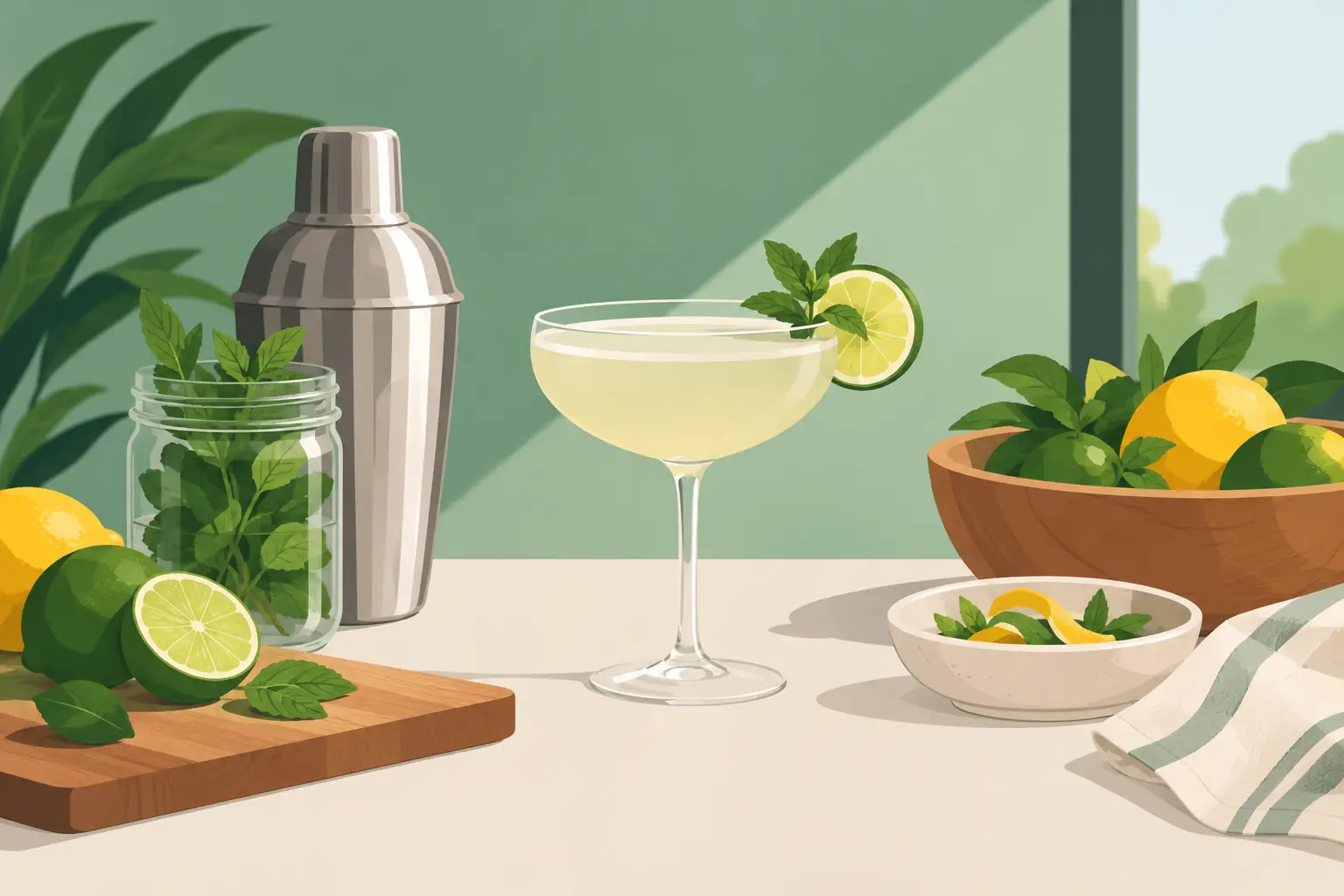
A lemon drying out in the produce drawer is not a small thing when it happens every week. Neither is buying a liqueur for one recipe, using two ounces, then letting the rest disappear behind the bourbon. Sustainable cocktails begin with a more useful question than “What should I buy?” Ask: “What can I make well with what is already here?”
For a home bar, sustainability is less about chasing a perfect zero-waste drink and more about making fewer unnecessary purchases, using fresh ingredients before they turn, and choosing recipes that give each bottle a longer working life. The result is usually a better bar, too: less clutter, clearer decisions, and drinks you can repeat with confidence.
What sustainable cocktails mean at home
A sustainable drink can include local produce, lower-waste packaging, and thoughtfully sourced spirits. Those choices matter, but they are only part of the picture. At home, the biggest and most controllable source of waste is often overbuying: duplicate bottles, specialty syrups with one purpose, and produce purchased without a plan to use the remainder.
A practical approach has three parts. First, start with ingredients you already own. Second, select recipes that use overlapping components across several drinks. Third, treat leftovers as ingredients with a next use, not as an afterthought.
This does not mean every cocktail must use scraps or avoid every new purchase. A specific bottle may be worthwhile if it opens up several recipes you genuinely want to make. The useful test is simple: will this ingredient earn a place in more than one drink, or does it solve a one-night problem?
Buy for a recipe cluster, not one drink
Before adding a bottle or mixer to your cart, look at what else it supports. Dry vermouth, for example, can move between a Martini, Bamboo, Gibson, and many variations on those classics. Ginger beer works in a Moscow Mule, Dark ’n’ Stormy-style drink, and a nonalcoholic highball. Mint can be used in a Mojito, Southside, Julep, or a simple citrus spritz.
That overlap matters more than a broad collection of novelty ingredients. A small, active home bar is usually more sustainable than a large one built around occasional cravings. It also makes party planning easier because one purchase can support a short menu rather than a single signature cocktail.
Build sustainable cocktails from your existing bar
Start by taking a quick inventory of bottles, mixers, citrus, herbs, fruit, and pantry staples. You do not need a spreadsheet to benefit from this. Even a note on your phone can reveal that you have three open sweeteners, half a bottle of orange liqueur, or enough limes for drinks tonight.
Then separate ingredients by urgency. Fresh berries, herbs, cut citrus, and opened vermouth should move to the front of your plans. Shelf-stable spirits can wait. This reverses the common habit of choosing a drink first and buying whatever it requires, even when more perishable ingredients are sitting unused.
Kokto’s ingredient-first approach is designed for this exact decision: start from bottles, mixers, and fresh ingredients already in your bar, then see which recipes are ready now and which are missing one meaningful item. That distinction helps prevent a shopping list from growing around a single drink.
Use the whole citrus purchase
Citrus is essential to many classics, but it is also one of the easiest ingredients to waste. Plan two or three drinks around the same lemon, lime, grapefruit, or orange purchase. If a recipe needs juice, save a clean section of peel for a twist or an oleo-saccharum-style syrup. If you need a peel, juice the fruit for a sour, lemonade, or cooking later that day.
Fresh juice tastes best when used promptly, especially lime juice. The sustainable choice is not always to stretch it for a week. It is often to buy a realistic amount and plan around it. A two-person evening may call for two limes, not a bag of ten.
Turn ripe fruit into a deliberate ingredient
Soft berries, a browning banana, a ripe peach, or a handful of grapes may no longer be ideal for a fruit plate, but they can still contribute flavor. Muddle fruit gently in a shaker, blend it into a frozen drink, or simmer it with equal parts sugar and water for a short-lived syrup.
Be selective here. Fruit that is moldy or smells fermented in an unpleasant way belongs in the trash or compost, not in a cocktail. Sustainability should never override food safety.
Choose recipes that make leftovers useful
The best low-waste home-bar habits are built into your recipe selection. If you open sparkling wine, choose drinks that use it over the next day or two. If you make simple syrup, pick a few recipes that use it before it loses freshness. If you buy a bunch of mint, make one mint-forward drink and reserve the rest for iced tea, fruit, or a second cocktail style.
Syrups deserve particular attention because homemade versions can be both economical and perishable. A basic 1:1 simple syrup is flexible, but a richer 2:1 syrup generally lasts longer in the refrigerator and lets you use less volume per drink. Label it with the date. If it becomes cloudy, smells off, or develops visible growth, discard it.
Batching can also reduce waste when you are hosting. Choose two drinks that share a base spirit and at least one modifier, then batch the shelf-stable ingredients ahead of time. Add citrus, soda, sparkling wine, and ice close to serving. You will use ingredients more predictably and avoid opening several bottles for a guest list that may change at the last minute.
Think carefully about ice, garnishes, and packaging
A dramatic garnish can be memorable, but it should have a reason to be there. A citrus twist adds aromatic oils. A mint sprig gives fragrance. A dehydrated wheel can be attractive, though it requires time and energy to make. If a garnish is purely decorative and likely to be tossed untouched, consider skipping it or using a smaller version.
Ice is another trade-off. Large clear cubes look polished and dilute slowly, but home clear-ice methods can create offcuts. Those pieces are still useful: keep them in a separate container for shaken drinks, blended drinks, or chilling wine. Do not confuse “clear” with “better” for every recipe. Standard cubes are often exactly right for a highball or a drink that benefits from quicker dilution.
When shopping, returnable bottles, cans, concentrated mixers, and ingredients sold in right-sized quantities can all reduce waste. But packaging is only one variable. A locally bottled mixer that sits unused is not automatically a better choice than a widely available option you finish regularly. Purchase behavior matters as much as the label.
Make substitutions without creating more waste
Substitution is useful when it preserves the role an ingredient plays in the drink. If a recipe calls for a dry orange liqueur, another orange liqueur may work, though sweetness and proof can shift the balance. A lemon-for-lime swap is more noticeable because the acids and aromas differ. It may still produce a good drink, but it is no longer the same recipe.
Use substitutions to rescue an evening, not to force every recipe to fit every ingredient. A reliable cocktail has a balance of spirit, sweetness, acidity, dilution, and aroma. If you replace several elements at once, make a smaller test serving before committing your last lemon or opening another bottle.
For less experienced home bartenders, this is where complete recipe context matters. A recipe title alone cannot tell you whether a swap will affect sweetness, strength, or texture. Look for clear measurements, method, glassware, and a description of the ingredient’s job in the drink.
Give every purchase a next step
The most sustainable shopping list is short and specific. Rather than buying a collection of ingredients for vague future use, identify the one addition that gives your current bar the most useful options. That might be fresh lemons for a gin-and-whiskey week, tonic water for a bottle of gin you already enjoy, or sweet vermouth for several spirit-forward classics.
After making a drink, take ten seconds to decide what comes next for the remaining ingredients. Put the opened mixer where you will see it. Label the syrup. Move the herbs into water. Plan tomorrow’s citrus use before it becomes a decision you have to make while tired.
A sustainable home bar is not defined by perfection or a cabinet full of specialty tools. It is defined by attention: make the drink you want, use what you buy, and let the next good cocktail begin with what is already within reach.