
Home Bar Inventory Checklist That Stays Useful
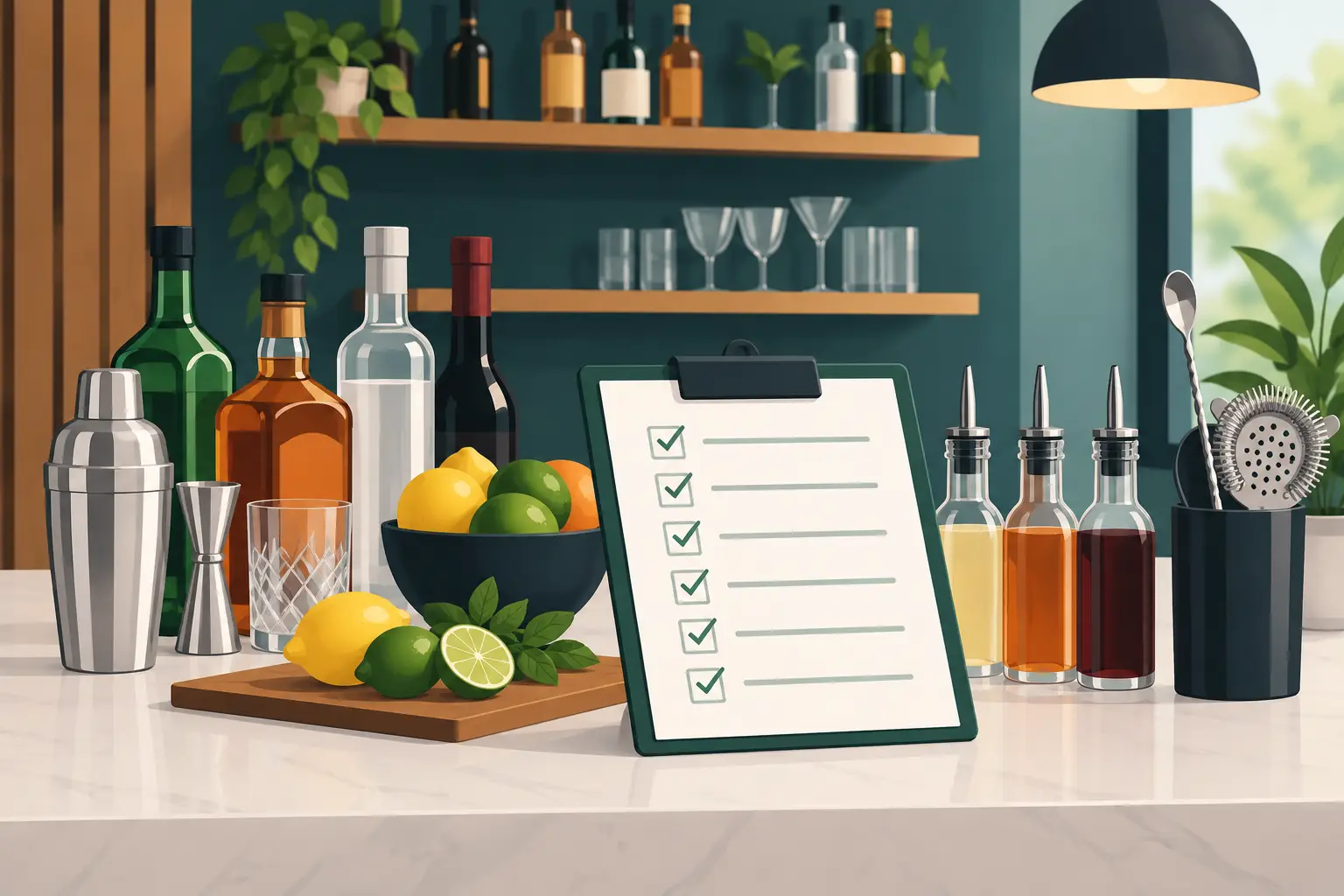
A crowded shelf can still leave you with nothing obvious to make. That is the problem a good home bar inventory checklist solves. It turns bottles, mixers, and fresh ingredients into practical choices: drinks you can make now, recipes that need one sensible purchase, and items that are quietly taking up space.
This is not a contest to own every amaro or collect obscure liqueurs. Your inventory should reflect how you drink, how often you host, and how much storage you actually have. A couple who mostly makes Margaritas and Gin & Tonics needs a different system than someone planning a twelve-person holiday party.
Start Your Home Bar Inventory Checklist by Function
Organizing only by bottle type is a useful start, but it does not tell you what each ingredient does in a drink. A practical inventory records the item, its category, its approximate amount, and its role. That last detail makes shopping and substitutions much easier.
Base spirits
List your primary spirits first: vodka, gin, white rum, aged rum, tequila or mezcal, whiskey, brandy, and any others you use regularly. Record the style when it affects recipes. London dry gin and a soft floral gin may both be gin, but they will not produce the same Martini or Negroni. The same is true of blanco tequila versus reposado, or rye whiskey versus bourbon.
You do not need to track every ounce with laboratory precision. “Nearly full,” “half bottle,” “one or two pours,” and “empty” are often enough. Exact quantities matter more before a party, when a bottle that looks adequate may not cover the number of servings you have planned.
Modifiers and liqueurs
These are the bottles that give a home bar range: dry and sweet vermouth, orange liqueur, coffee liqueur, amaro, aperitif wine, maraschino liqueur, crème de cassis, and similar ingredients. Add the flavor role beside each one: bitter, herbal, orange, coffee, nutty, sweet, or fortified wine.
Modifiers deserve closer attention than most spirits because their shelf life varies. Opened vermouth, for example, is a wine-based ingredient and should be refrigerated. It does not stay fresh indefinitely. If you find an old, oxidized bottle at the back of the fridge, mark it for replacement rather than treating it as available inventory.
Mixers, juices, and syrups
Include tonic water, soda water, ginger beer, cola, citrus juice, tomato juice, coconut cream, and other nonalcoholic mixers. Note package size and whether the item is unopened. Six cans of tonic can support an impromptu gathering; a half-flat two-liter bottle is not a reliable plan.
For syrups, record both flavor and date made or opened. Simple syrup, rich syrup, grenadine, orgeat, honey syrup, and flavored syrups can make several recipes possible, but freshness is part of availability. If you would not want to taste it on its own, do not count it as ready for guests.
Fresh ingredients and garnish
Citrus, mint, basil, cucumber, berries, pineapple, olives, cocktail onions, cherries, and eggs belong on the same checklist. They are often the real gap between a recipe that looks possible and one that is actually good.
Treat fresh ingredients as short-window inventory. A lime is not interchangeable with lemon just because both are citrus, and a missing orange peel can change the balance and aroma of an Old Fashioned. Keep this section simple: what you have, its condition, and when you expect to use it.
The Fields That Make an Inventory Useful
A long list of names is better than guessing, but a few added fields turn it into a decision tool. For each item, track these details:
- Item and specific style, such as blanco tequila or dry vermouth
- Approximate amount remaining
- Opened date when freshness matters
- Storage location, especially for refrigerated items
- Recipes or drink families you expect it to support
- Replacement priority: soon, eventually, or do not replace
The replacement field prevents automatic restocking. A bottle can be empty without being a real need. If you bought peach liqueur for one party two summers ago and have not used it since, its empty space is information. You may prefer an ingredient that works across more recipes.
A notes field can also save frustration. Write down whether a ginger beer is very spicy, whether a syrup is homemade, or whether a particular gin is reserved for Martinis. These small details help you repeat a drink you liked and avoid an unplanned flavor mismatch later.
Separate “Have” From “Usable Now”
The most common inventory mistake is counting an ingredient that is technically present but not serviceable. Flat soda, dried mint, a few drops of citrus juice, or an opened vermouth past its best date should not make a cocktail appear ready.
Use three clear statuses: ready, limited, and replace. “Ready” means you can confidently make the drink as written. “Limited” means you can make one or two servings, or the ingredient needs to be used soon. “Replace” means it should not guide your recipe choices until you buy a fresh bottle or mixer.
This distinction is especially helpful when planning for guests. A recipe may be available for one person but not for six. If you are serving a classic that needs fresh lime, soda, and a specific spirit, inventory each component against the intended number of drinks, not just against a single recipe.
Find the Meaningful Gaps Before You Shop
Once your list is complete, do not begin by shopping for the most interesting missing bottle. Start from the recipes your current inventory nearly supports. A missing ingredient is meaningful when it opens several drinks you genuinely want to make, fits your preferred base spirits, and is likely to be used before it loses quality.
For example, if you own gin, sweet vermouth, Campari, citrus, and soda water, a bottle of dry vermouth may expand your options more than a specialty liqueur. If tequila is your most-used spirit, fresh limes and orange liqueur may have more value than another whiskey. The right next purchase depends on the overlap between your current bar and your actual habits.
Kokto is built around this ingredient-first approach: start with bottles, mixers, and fresh ingredients already in your bar, then see the real gap. That is more useful than buying toward a vague idea of a “complete” home bar.
Keep a Small Core, Then Add for Your Tastes
A compact inventory is often easier to use than a large one. For many home bars, a strong core includes a few favored base spirits, a dry and a sweet vermouth or another versatile modifier, an orange liqueur, bitters, soda water, tonic, fresh citrus, and one or two syrups. From there, build according to the drinks you actually repeat.
There are trade-offs. Refrigerated vermouth expands classic cocktail options but asks for regular use. Fresh mint makes a drink feel special but creates waste if you only make one Mojito. Large bottles can cost less per ounce, but a smaller format may be smarter for a rarely used liqueur.
When you add an item, give it a job. Perhaps it supports a specific dinner menu, fills a hole in a base-spirit collection, or makes three saved recipes possible. If its only job is to look impressive on a shelf, pause before buying it.
Review Your Inventory on a Realistic Schedule
A monthly five-minute check works well for active home bars. Look for low staples, opened wine-based modifiers, expiring fresh ingredients, and mixers needed for the next weekend. A quarterly deeper review is enough for less frequent drinkers.
Before hosting, make a separate event copy of the checklist. Choose two or three drinks rather than offering every possible option. Then calculate ingredients by servings, include ice and garnish, and identify one nonalcoholic choice. This keeps the shopping list focused and gives guests a better experience than an overextended menu.
The most useful inventory is not the most detailed one. It is the one you will update before shopping, glance at before making a drink, and trust when friends ask what is available. Keep it honest, let empty bottles tell you what matters, and make your next purchase earn its place.