
How to Choose Bitters for Cocktails at Home
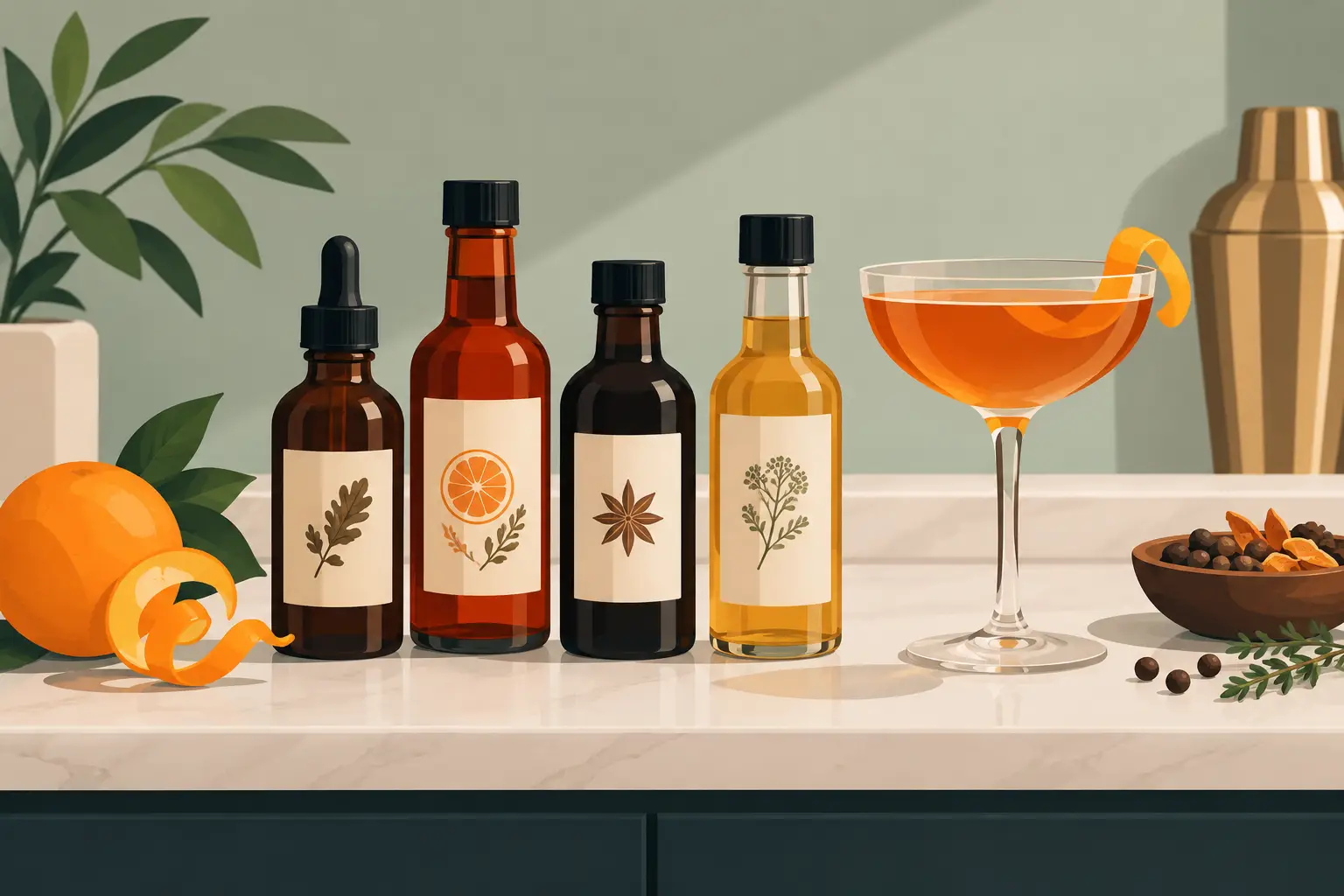
A bottle of bitters can make a plain Whiskey Sour taste finished, pull a Manhattan into focus, or turn a fizzy highball into something worth repeating. But the bitters shelf can also create a familiar home-bar problem: many small bottles, few clear uses. To choose bitters for cocktails well, start with the drinks and base spirits you already make - not with the most unusual label on the shelf.
Bitters are concentrated seasoning. They add aroma, bitterness, spice, fruit, or herbal depth in small dashes. That means one bottle can be useful across dozens of recipes, while another may only suit a narrow flavor idea. The right first purchase depends less on whether a flavor sounds interesting and more on what it will do for your actual bar.
Start with the cocktail families you make
Before comparing brands or flavors, look at your regular drinks. An Old Fashioned, Manhattan, Whiskey Sour, Gin and Tonic, Daiquiri, Negroni, and sparkling wine cocktail do not need the same kind of bitters. The best choice is the one that appears naturally in the recipes you are likely to make this month.
For whiskey drinks, aromatic bitters are the practical starting point. Their baking spice, dried fruit, gentian bitterness, and warm herbal notes support bourbon, rye, brandy, and aged rum. They are the standard seasoning in an Old Fashioned and Manhattan, and they can add structure to a Whiskey Sour without making it taste overtly spiced.
For gin, tequila, and lighter rum drinks, orange bitters often offer more immediate value. Their citrus peel and spice notes brighten a Martini, improve a Gin and Tonic, and fit naturally with orange liqueur, dry vermouth, and grapefruit. They also work well when a cocktail needs citrus aroma but does not need more juice or sweetness.
If you mostly make classics, begin with one dependable bottle rather than building a collection. Aromatic bitters are usually the broadest first pick. Add orange bitters next if you make Martinis, gin drinks, or spirit-forward cocktails with citrus accents. That two-bottle setup covers a meaningful share of classic home-bar recipes.
What each major bitters style does
The label flavor is only part of the decision. Think about the role each style plays in a drink.
Aromatic bitters add backbone
Aromatic bitters are the all-purpose category. They tend to be dark, spicy, herbal, and bitter, with notes that may suggest clove, cinnamon, gentian, cherry bark, or dried citrus. In a sweet or rich drink, they provide contrast. In a spirit-forward drink, they connect the sugar, vermouth, and base spirit instead of letting any one element dominate.
Use them when a recipe calls simply for “bitters,” unless it specifies otherwise. They are also the safest option when you are adapting a drink at home and want a small amount of complexity without changing its basic identity.
Orange bitters sharpen and lift
Orange bitters are more than orange flavor. Good examples bring peel bitterness, floral citrus oil, and dry spice rather than the sweetness of orange juice or triple sec. They make clear spirits feel more defined and give stirred drinks a brighter nose.
They are especially useful in a Martini variation, a Martinez, an Old Fashioned with bourbon or brandy, and drinks built around gin, blanc vermouth, or aperitifs. If your bar already has aromatic bitters, orange is usually the next bottle that opens up distinct recipe options.
Peychaud's-style bitters bring anise and color
New Orleans-style bitters, often recognized by their vivid red color and anise-led profile, are not a substitute for aromatic bitters. They are essential to a Sazerac and lend a lighter, more floral character to some whiskey and brandy drinks. Their taste can be divisive: the licorice note is clear, and it will not disappear behind a delicate base spirit.
Buy this style when Sazeracs, Vieux Carrés, or New Orleans classics are already on your list. It is a high-value bottle for that family, but less universal than aromatic or orange bitters.
Chocolate, mole, coffee, and walnut bitters deepen dark drinks
These specialty bitters shine with aged spirits. Chocolate and mole bitters can reinforce cocoa, chile, and roasted notes in tequila, mezcal, bourbon, and dark rum. Coffee bitters can bring a dry roast character to rum or whiskey cocktails. Walnut bitters add a nutty, bittersweet quality that pairs well with amontillado sherry, brandy, and autumnal flavors.
Their trade-off is range. A few dashes can make a strong impression, but they may be hard to place in bright citrus drinks or simple gin cocktails. Consider them when you can name at least three recipes or drink ideas you will make with them, not just one impressive-sounding variation.
Fruit and floral bitters are accents, not defaults
Grapefruit, peach, cherry, celery, lavender, and similar bitters can be excellent. Grapefruit is particularly useful with tequila, mezcal, gin, and sparkling drinks. Celery bitters can transform a savory Bloody Mary or add a fresh green edge to a gin drink. Cherry bitters pair naturally with whiskey and brandy.
Still, these bottles usually solve a narrower problem. Buy them when they match a base spirit and occasion you return to, such as grapefruit bitters for summer tequila highballs or celery bitters for brunch drinks. They are better targeted purchases than universal recommendations.
Choose bitters for cocktails by the gap in your bar
A useful purchase should create more possibilities than it creates questions. Start from the bottles, mixers, and fresh ingredients already in your bar, then identify the real gap.
If you have bourbon, sugar, and oranges, aromatic bitters turn that setup into a classic Old Fashioned. If you have gin, dry vermouth, and olives or a lemon, orange bitters can expand your Martini options. If you have rye, absinthe or an anise rinse, and sugar, New Orleans-style bitters point directly toward a Sazerac.
This is more reliable than shopping by flavor alone. A bottle described as “smoky cardamom” may sound promising, but it is a poor first choice if your regular ingredients are vodka, lemonade, and light beer. A familiar aromatic bitter may feel less exciting, yet it can make many more drinks you can actually serve.
When comparing recipes, pay attention to whether bitters are structural or optional. In an Old Fashioned, bitters are structural: leaving them out changes the drink's balance. In some highballs, bitters are an optional seasoning: the drink still works without them, but a dash adds aroma and dryness. That distinction helps prioritize spending.
How many dashes are enough?
Bitters are forgiving up to a point. Most classic recipes call for one to three dashes, but dash size varies by bottle, cap, and how firmly you shake it. A small 2-ounce bottle can therefore last much longer than its size suggests.
Start with the recipe measurement when one is given. If you are adjusting a familiar drink, add one dash, taste, then add another only if the flavor needs more definition. This is particularly useful with intensely flavored bitters such as celery, habanero, lavender, or smoked chile.
Do not assume more bitters always means more balance. Too much aromatic bitters can make a light drink taste medicinal or muddy. Too much orange bitters can turn a Martini pithy and sharp. In a simple two- or three-ingredient cocktail, every dash is more noticeable than it would be in a drink with juice, syrup, and several modifiers.
Brand matters less than recipe fit
Many recipes name a specific bitters brand because its flavor is part of the original formula, especially in recognized classics. When making a Sazerac, for example, the traditional bitters style matters. When making an Old Fashioned, a different aromatic bitters brand may still produce a very good drink, though it may taste warmer, more bitter, or more citrus-forward than the version you know.
Treat substitutions honestly. Aromatic bitters can often replace another aromatic product, but they are not interchangeable with orange or New Orleans-style bitters. Orange bitters can add lift where aromatic bitters are called for, yet the result will be a variation, not a direct match. If a recipe has only two dashes of bitters, the swap may be subtle. If bitters are a central flavor, the difference is more meaningful.
For a small home bar, buy the style first and the exact brand second. Once you know you enjoy a category, comparing brands becomes useful: some are clove-heavy, some lean toward cherry and spice, and others bring more citrus or gentian. That is a refinement step, not a requirement for making good drinks now.
Store them for the way you use them
Bitters are shelf-stable and generally keep well because of their alcohol content, but heat and direct light can flatten their aroma over time. Keep bottles capped and upright in a cool cabinet, away from the stove or sunny windowsill. You do not need to refrigerate them.
Small bottles are often a sensible choice for specialty flavors. For aromatic bitters you use every week, a larger bottle can be economical. There is no prize for owning a crowded bitters collection. The useful bottle is the one that moves from the back of the cabinet into your next drink.
Choose one style that supports the cocktails you already enjoy, make those drinks a few times, and notice what is missing. Your next bottle will be easier to identify when it answers a real flavor question at your own bar.