
Vermouth Storage After Opening Made Simple
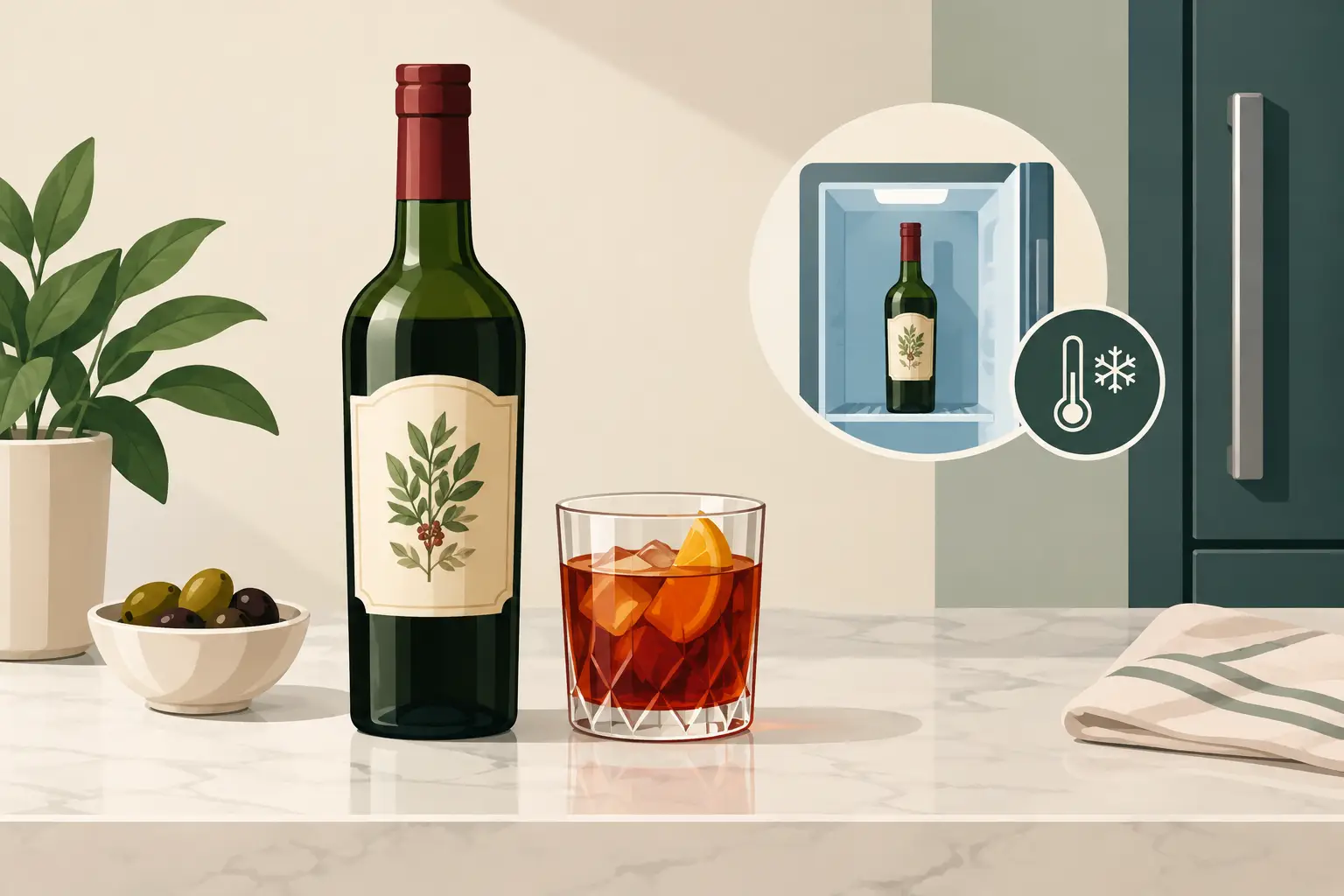
A Martini can go flat for a reason that has nothing to do with your gin or technique: the vermouth has been open on a shelf for three months. Vermouth storage after opening matters because vermouth is wine-based, even though its alcohol content and botanical flavor can make it seem more durable than an ordinary bottle of wine.
The practical rule is straightforward: once opened, close the bottle tightly and refrigerate it. Then use it while its herbal, citrus, floral, and bitter notes still taste lively. A bottle will not turn bad at midnight on a fixed deadline, but it will slowly change - and that change is much easier to notice in a delicate cocktail than in a strongly flavored one.
Why Open Vermouth Changes
Vermouth is fortified and aromatized wine. Producers add spirit, sugar in many styles, and a proprietary blend of botanicals, herbs, roots, spices, and citrus elements. Those additions give vermouth more staying power than unfortified wine, but they do not stop oxidation.
Every time you pour a drink, oxygen replaces some of the liquid in the bottle. Over time, that oxygen softens fresh aromatics and brings out muted, stale, or overly nutty notes. Heat and light can speed up the process. The issue is usually flavor quality rather than an immediate safety concern, but a tired vermouth can make a well-built cocktail taste strangely dull.
This is why a home bar benefits from treating vermouth as a refrigerated mixer, not as a permanent shelf bottle alongside whiskey or tequila. It is also worth buying a bottle size that fits how often you actually use it. A smaller bottle that stays fresh can be more useful than a large bottle that spends most of its life half full.
Vermouth Storage After Opening: The Best Method
Put opened vermouth in the refrigerator as soon as possible. Keep the original cap or cork secured firmly, and store the bottle upright to reduce the liquid’s contact with the closure. The refrigerator door is convenient, but a colder, more stable spot toward the back is better when space allows.
This applies to dry vermouth, sweet or red vermouth, blanc or bianco vermouth, and rosé vermouth. Their sugar levels, botanical formulas, and alcohol percentages vary, so they will not all age at exactly the same rate. Refrigeration remains the useful default for all of them.
Label the bottle with its opening date. That small habit removes the guesswork that comes with a crowded refrigerator. If you keep several styles for Martinis, Manhattans, Negronis, and aperitif drinks, write the style on the label too. Bottles can look remarkably similar when you are mixing for guests.
A practical freshness window
For most home bars, plan to use opened vermouth within about one to two months for its best flavor. Dry vermouth often shows oxidation sooner because its more restrained profile leaves less sweetness to cover fading aromatics. Many drinkers prefer to finish it in roughly four to six weeks.
Sweet vermouth can remain enjoyable a little longer, often six to eight weeks and sometimes closer to two months when refrigerated carefully. But “still usable” and “at its best” are different standards. If you make a Martini where vermouth is a clear part of the drink, a fresh bottle is worth more than it is in a cocktail with Campari, coffee liqueur, or several ounces of assertive base spirit.
Use these windows as planning guidance, not laboratory expiration dates. A well-sealed bottle opened recently may taste less fresh than expected if it spent time in a warm kitchen. A bottle stored cold with very little air exposure may stay bright beyond the usual range.
How to Limit Oxygen Exposure
If vermouth is a regular ingredient in your home bar, refrigeration and a tight cap will handle most situations. If you open bottles infrequently, reducing the air in the bottle can extend its best period.
The simplest option is to decant the remaining vermouth into a clean, smaller glass bottle with an airtight closure. Less empty space means less oxygen available to affect the wine. Choose a bottle that has been thoroughly washed, fully dried, and free of soap or food odors. Even a small amount of water or residual aroma can change a delicate vermouth.
Vacuum wine stoppers can help, though their results vary by product and by bottle. They are useful as an extra measure, not a substitute for refrigeration. Inert-gas preservation systems can also slow oxidation by replacing air in the bottle, but they make the most sense for someone maintaining several specialty vermouths or low-turnover aperitif wines.
Avoid leaving a pour spout in the bottle for storage. It is convenient during a busy cocktail night, but it does not seal as reliably as the original cap. Once service is over, remove the spout, close the bottle, and return it to the refrigerator.
How to Tell Whether Vermouth Is Past Its Best
Start with smell and taste, not just the calendar. Fresh dry vermouth may show lemon peel, herbs, flowers, saline notes, or gentle bitterness. Fresh sweet vermouth may lean toward spice, dried fruit, vanilla, cocoa, citrus, or bitter roots, depending on the brand.
When vermouth oxidizes, those defining notes become less clear. It may smell flat, overly sweet, sharply sour, stale, or like bruised apple. A small taste can confirm the change. If it no longer tastes like something you would willingly sip with ice and a citrus twist, it probably will not improve your cocktail.
Cloudiness alone is not always a reliable warning sign, since some formulas and cold storage can create harmless sediment or haze. But visible mold, unusual fizz in a style that should be still, or a genuinely unpleasant odor are clear reasons to discard the bottle.
Do not assume a bold cocktail will hide every problem. In a Negroni, old sweet vermouth can reduce the drink’s lifted, wine-and-herb center, leaving a heavier impression of gin and bitterness. In a Manhattan, it can make the whiskey taste disconnected rather than integrated. In a Martini, there is nowhere for stale dry vermouth to hide.
Match Your Bottle to How You Drink
The most effective storage strategy starts before you buy. If your usual drinks use dry vermouth only by the teaspoon or occasional ounce, choose a smaller format when available or plan several vermouth-forward drinks around the opening date. A 50/50 Martini, Bamboo, Adonis, or vermouth and soda can help you enjoy the bottle as an ingredient in its own right rather than treating it as a garnish for spirits.
For sweet vermouth, plan around familiar uses such as the Manhattan, Negroni, Boulevardier, Americano, and Rob Roy. A bottle can also earn its refrigerator space as an aperitif: serve it over ice with an orange or lemon peel, depending on the style.
This is where an ingredient-first approach is useful. Start from the vermouth you have, then look for recipes that use the style and amount you need. Kokto’s recipe finder is built for that practical question: what can you make now, and what one additional bottle or fresh ingredient would create more useful options?
A Better Habit for the Home Bar
Keep opened vermouth cold, sealed, dated, and visible enough to use. That is more valuable than trying to stretch one bottle indefinitely. If a bottle has faded but is not spoiled, you may still choose to use it in cooking, where its herbal wine character can add depth to pan sauces or braises. Just taste it first, because cooking concentrates flaws as well as flavor.
The next time you open vermouth, treat the date as an invitation to make a few good drinks over the coming weeks. Fresh vermouth is not a fragile inconvenience - it is one of the easiest ways to make the bottles already in your bar taste more complete.