
Home Mixology That Starts With What You Have
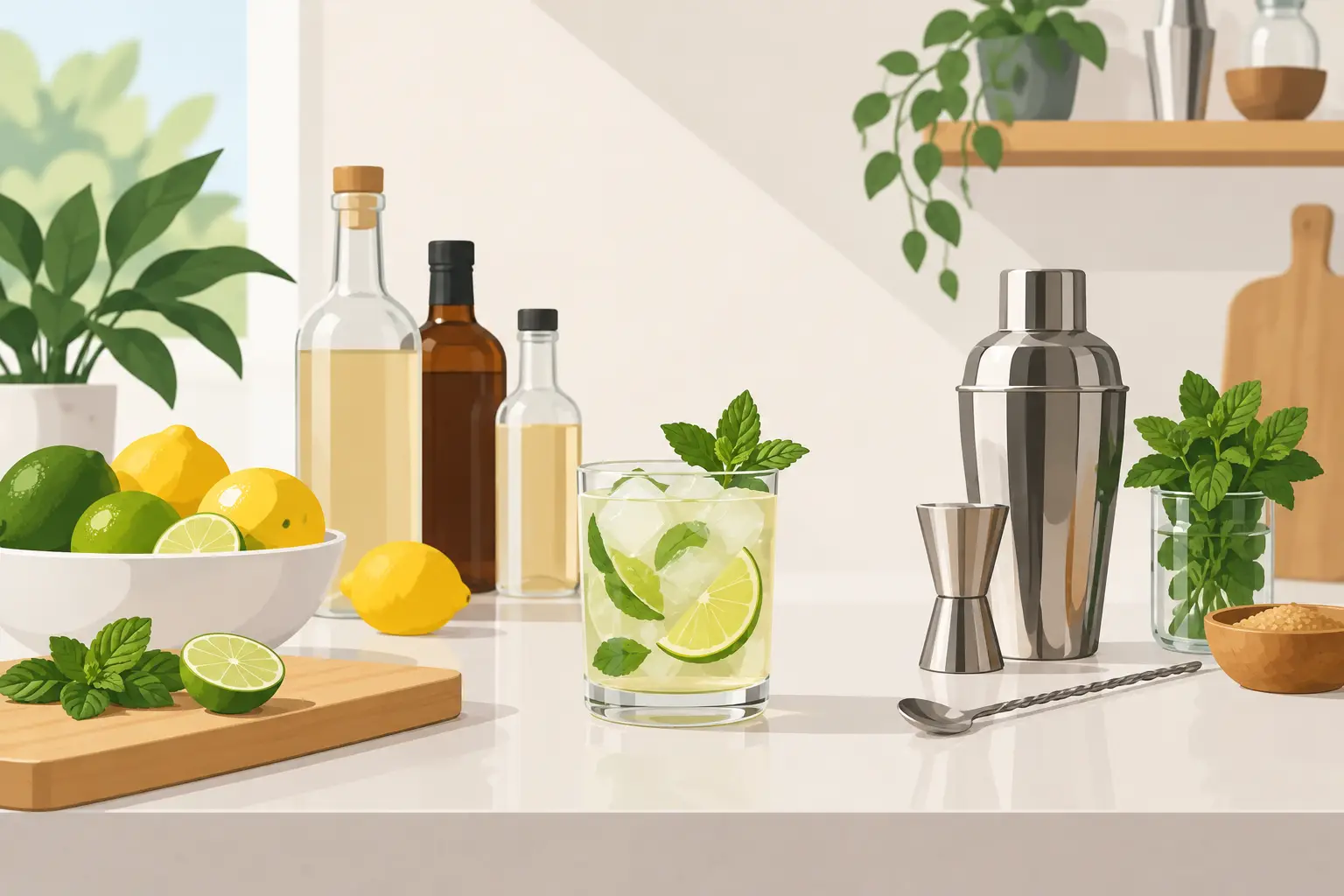
That half-used bottle of rye, a good tequila, tonic water, lemons, and a jar of cocktail cherries are not a random collection. They are the beginning of a useful home bar. Home mixology becomes much easier when the first question is not “What should I buy?” but “What can I make well with what is already here?”
A good drink at home does not require a wall of rare bottles or a bartender’s speed. It requires a reliable way to match ingredients, understand a few drink structures, and recognize the one missing item that is actually worth buying. That approach reduces waste, keeps shopping focused, and makes an ordinary Tuesday drink as manageable as a dinner-party menu.
Home Mixology Starts With Inventory, Not Inspiration
Recipe browsing can be inspiring, but it can also create an expensive problem: every appealing drink seems to require another liqueur, syrup, or garnish. Start instead by taking a plain inventory of your bar. Include base spirits, liqueurs, vermouths and fortified wines, mixers, citrus, sweeteners, and garnishes.
Be specific. “Whiskey” is less useful than “bourbon, rye, and blended Scotch.” “Orange liqueur” may mean Cointreau, triple sec, or curaçao, which can perform similarly in some recipes but bring different sweetness or proof. Note whether vermouth is fresh and refrigerated, whether tonic is still lively, and how many lemons or limes you can realistically use tonight.
This inventory gives each bottle a job. Gin might lead to a Gin and Tonic, Tom Collins, or Negroni-style variation. Tequila might point toward a Margarita, Paloma, or Ranch Water. A bottle that appears limited on its own often becomes more useful once you look at the mixers and fresh ingredients beside it.
Ingredient-first discovery is especially helpful for growing home bars. Instead of collecting recipes you may someday make, look for recipes that are ready now, then recipes that are one meaningful ingredient away. A missing lemon is a straightforward gap. A missing bottle of an obscure amaro may be a reason to choose another drink.
Learn the Few Structures Behind Many Drinks
You do not need to memorize hundreds of recipes to make better decisions. Many familiar cocktails follow a small set of patterns. Knowing the pattern helps you spot what an ingredient is doing and where substitutions are likely to work.
A sour balances spirit, citrus, and sweetener. Think Margarita, Daiquiri, Whiskey Sour, or Sidecar. If a drink tastes sharp, it may need a little more sweetener. If it tastes flat or sugary, fresh citrus and proper dilution may be the answer. The exact ratios vary by spirit, proof, citrus acidity, and personal preference, so a published recipe is a better starting point than guessing from a name alone.
A spirit-forward drink typically combines a base spirit with a sweet or herbal modifier and bitters. The Manhattan, Old Fashioned, and Negroni sit in this territory, though their structures are quite different. Here, the quality and condition of ingredients matter more because there is little juice or soda to soften rough edges. Fresh vermouth and measured dilution make a noticeable difference.
Highballs pair a spirit with a carbonated mixer and usually a citrus element or garnish. They are simple, but not careless. Cold ingredients, fresh carbonation, and enough ice determine whether a Gin and Tonic feels crisp or watery. Highballs are also practical for guests because they are easy to scale without turning the host into a full-time bartender.
Stirred, shaken, and built drinks should not be treated as interchangeable. Shake cocktails with citrus, egg white, cream, or other opaque ingredients to combine and chill them quickly. Stir clear, spirit-forward cocktails for a silky texture and controlled dilution. Build many highballs directly in the serving glass. These techniques are not ceremony - they are part of the recipe’s texture and balance.
Buy for Range, Not for a Single Recipe
The smartest next purchase is rarely the most unusual bottle. It is the one that creates several credible options from ingredients you already own.
Before buying, ask three questions: How many drinks does this ingredient add? Does it cover a role missing from my bar? Will I use it before its quality declines? A bottle of sweet vermouth can open classic stirred drinks, but it needs refrigeration after opening and has a shorter useful life than a spirit. That is a good purchase for someone who enjoys Manhattans and Negronis regularly, not necessarily for someone making one holiday cocktail.
Citrus, quality tonic or soda water, simple syrup, and a versatile orange liqueur often create more immediate range than a novelty syrup. Bitters are similarly efficient: a small bottle can support many recipes and lasts well. But versatility still depends on your preferences. If you dislike bitter aperitivo drinks, buying Campari because it appears in classics is not a practical move.
One-bottle gaps deserve special attention. If buying ginger beer gives you several options with rum, whiskey, and tequila already in the cabinet, it has a clear payoff. If a niche liqueur unlocks only one recipe you are unsure about, save it for later. This is how a home bar grows with intention rather than becoming a shelf of abandoned experiments.
Make Recipes Repeatable Before You Improvise
Confidence comes from repeating a good result. Use a jigger or another consistent measuring tool, chill glassware when a recipe calls for it, and use enough ice. These small habits matter more than buying professional-looking equipment.
Fresh juice is worth the effort for citrus-forward drinks. Bottled juice has a place in cooking and convenience, but it rarely brings the brightness a Daiquiri or Margarita needs. At the same time, do not let perfection make you avoid easy drinks. A well-made highball with cold store-bought mixer can be exactly the right choice.
When you adjust a recipe, change one thing at a time. If a sour feels too tart, add a small amount of sweetener rather than changing the spirit, juice, and syrup at once. If a stirred drink feels hot, stir longer with good ice before reducing the alcohol. Keep a brief note on changes that worked. Your preferences are useful data, especially when you want to recreate a drink for someone else.
Substitutions should preserve function before flavor. Lemon and lime are not identical, but either supplies acidity. Dry curaçao and standard triple sec may both provide orange sweetness, though the final drink may differ in depth and proof. Replacing a full-bodied sweet vermouth with a dry vermouth changes a cocktail more dramatically. If a substitute changes the drink’s core balance, choose a recipe designed for what you have instead of forcing the original.
Plan for Guests Without Building a Full Bar
For a small gathering, choose two or three drinks with overlapping ingredients rather than offering a sprawling menu. One sparkling highball, one shaken citrus drink, and one spirit-forward option can cover different preferences while keeping prep reasonable. Include a nonalcoholic drink with the same level of care, such as citrus and soda with a flavored syrup or bitters alternative where appropriate.
Prep what does not suffer from waiting. Make simple syrup ahead, cut garnishes close to serving time, chill mixers, and set out measured tools. Citrus juice is best prepared shortly before guests arrive, while batched spirit-forward cocktails can work well when properly chilled and diluted. Avoid batching carbonated ingredients until serving.
Responsible hosting is part of good planning. Serve food, offer water, make lower-proof options easy to choose, and never make drinking the point of the evening. A thoughtful menu gives guests options, not pressure.
Use a Finder When the Decision Is the Hard Part
The hard part of home bartending is often not shaking or stirring. It is deciding what to make from an unstructured set of ingredients. A recipe library with clear ingredient requirements can turn that decision into a practical filter: show what is ready, show what is missing one item, and make the trade-off visible before you shop.
Kokto is designed around that ingredient-first question, with reviewed recipes, ingredient pages, and inventory-based discovery rather than generated suggestions with unclear recipe logic. Whether you use a tool or your own handwritten inventory, the useful habit is the same: start with the bottles, mixers, and fresh ingredients already in your bar.
Tonight, pick one bottle you have been overlooking and one recipe that needs no special trip to the store. Measure it carefully, taste before changing it, and make a note of what you would do differently next time. That is how a home bar becomes genuinely useful.