
Low Alcohol Cocktails at Home That Taste Complete
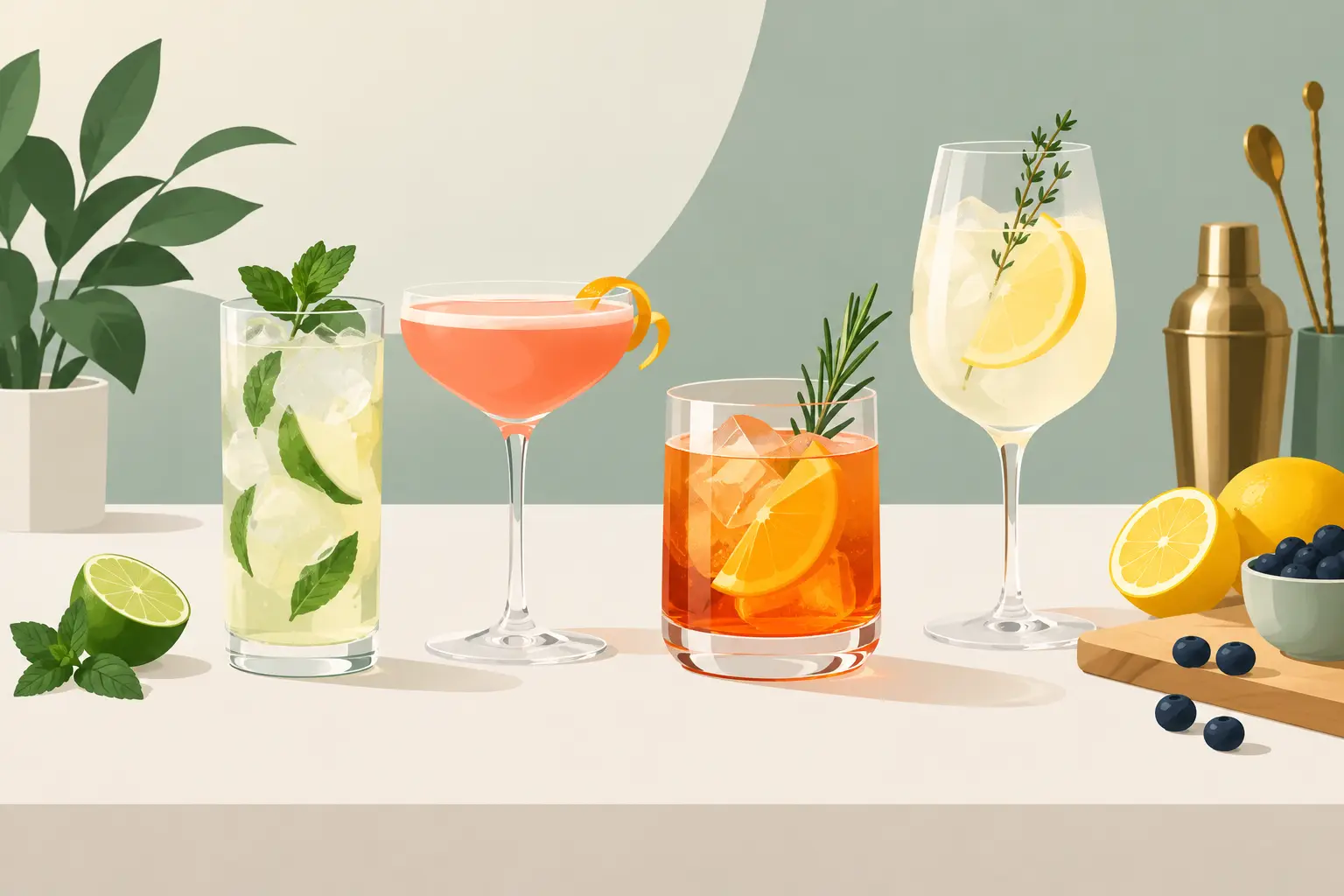
A drink does not need a full pour of high-proof spirit to feel considered. The best low alcohol cocktails at home still have contrast: bitterness against sweetness, citrus against body, cold carbonation against a fragrant garnish. They simply get that structure from vermouth, sherry, aperitifs, wine-based ingredients, and thoughtful dilution instead of relying on two ounces of liquor.
This is useful when you want a second drink that stays easygoing, when dinner calls for something more restrained than a Martini, or when guests have different preferences. Start from bottles, mixers, and fresh ingredients already in your bar. In many cases, the useful next step is not buying another spirit. It is learning which existing bottle can carry more of the drink.
What makes a cocktail low alcohol?
There is no single legal or universal cocktail definition. For practical home-bar planning, a low-alcohol cocktail generally lands well below the strength of a standard spirit-forward drink. Many fall in the neighborhood of beer or wine after ice dilution, though the final strength depends on the proof of each product, the amount of mixer, and how much ice melts into the glass.
That last point matters. A one-ounce gin and tonic may be lower in alcohol than a classic gin sour, but it can still taste sharp and spirit-led. A Bamboo, made with sherry and dry vermouth, often tastes more integrated because its lower-proof ingredients bring their own savory, herbal character.
Low alcohol is also different from zero proof. Bitters, vermouth, aperitifs, sherry, and liqueurs all contain alcohol. If someone needs a nonalcoholic drink, use a separately tested zero-proof recipe rather than assuming a light cocktail meets that need.
Build low alcohol cocktails at home around flavor roles
A reliable drink has a base, a balancing element, a source of lift, and often an aromatic finish. In a standard cocktail, a full-strength base spirit does most of the work. In a lower-proof build, divide that work among ingredients.
Start with a flavorful wine-based bottle. Dry vermouth brings herbs and a clean, lightly bitter finish. Sweet vermouth adds dark spice, vanilla, and gentle richness. Dry sherry can be saline and nutty; amontillado is deeper and rounder. White or ruby port adds fruit and weight. Aperitifs such as bitter orange liqueurs contribute color, bitterness, and a clear aperitivo character.
Then choose the drink's direction. Lemon or lime provides tension, but use it with care: a lower-proof base has less force behind it, so too much citrus can make the drink seem thin. Soda water, tonic, ginger beer, or sparkling wine adds length. A dash of bitters can sharpen the aroma, although it is not a zero-alcohol addition.
A helpful starting formula is one part flavorful low-proof base, one part complementary aperitif or vermouth, and two to three parts chilled sparkling mixer. Adjust from there. If the drink tastes flat, add a small squeeze of citrus or a dash of bitters before adding more alcohol. If it tastes too sweet, use soda water, a drier vermouth, or a more bitter component.
Five dependable low-alcohol builds
These recipes use common home-bar categories rather than specialty techniques. Chill your mixers first, use plenty of fresh ice, and taste before serving. Small changes in a vermouth or tonic brand can shift the balance.
Americano
Build 1 1/2 ounces Campari and 1 1/2 ounces sweet vermouth in an ice-filled rocks glass. Top with 2 to 3 ounces chilled soda water and stir briefly. Garnish with an orange slice or expressed orange peel.
The Americano is a useful benchmark because it proves that a low-alcohol drink can be unapologetically bitter. It is not meant to imitate a Negroni. The soda opens the herbal and citrus notes while keeping the finish refreshing. If Campari is too assertive for your taste, use a gentler bitter aperitif, but expect a sweeter result.
Bamboo
Stir 1 1/2 ounces dry sherry with 1 1/2 ounces dry vermouth and 1 dash orange bitters over ice. Strain into a chilled coupe or serve over fresh ice in a small rocks glass. Express a lemon peel over the surface and discard it, or use it as a garnish.
This is a strong choice for people who like Martinis but want less alcohol without losing a dry, savory profile. Fino or manzanilla sherry makes the lightest, saltiest version. Amontillado will make it nuttier and richer. Keep both sherry and vermouth refrigerated after opening for the freshest flavor.
White Port and Tonic
Build 2 ounces white port and 4 ounces tonic water over ice in a highball glass. Add a lemon wedge, orange slice, or a few cucumber ribbons.
White port is a practical low-proof bottle because it has enough sweetness and body to stand up to tonic. The ratio is flexible. Use more tonic for a crisper, lighter drink, or move closer to equal parts if you want the port's fruit and floral notes to lead. A dry tonic will keep this from becoming cloying.
Sherry Cobbler
Shake 3 ounces amontillado sherry, 1/2 ounce simple syrup, and 1/2 ounce lemon juice with ice. Strain over crushed ice in a tall glass, then garnish generously with orange slices and whatever berries are on hand.
The Cobbler is especially forgiving when you have fruit that needs using. Its ice is part of the recipe, gradually mellowing the sherry and citrus as you drink. For a less sweet version, reduce the syrup to 1/4 ounce. For a brighter version, use fino sherry, though its lighter body may call for a slightly gentler lemon pour.
Light Gin and Tonic
Build 1 ounce London dry gin and 4 ounces tonic water over ice in a highball glass. Add a lime wedge, grapefruit peel, or cucumber, depending on the gin's style.
This is the simplest route when you want the familiar botanical profile of gin but a lower overall alcohol level. It depends heavily on tonic choice. Standard tonic brings sweetness and quinine bitterness; a dry tonic lets the gin read more clearly. Do not compensate for weak or warm tonic by adding extra gin. Use cold tonic and fresh ice first.
Use your inventory before buying for one recipe
The most flexible low-alcohol home bar is not necessarily the largest one. A dry vermouth, sweet vermouth, one sherry or port, a bitter aperitif, soda water, tonic, citrus, and bitters can create a broad range of drinks. Those ingredients overlap more effectively than several one-purpose liqueurs.
Before purchasing a new bottle, identify the real gap. If you already have gin, sweet vermouth, Campari, oranges, and soda, you can make an Americano now. Adding dry vermouth and sherry would not just create one additional drink - it would open Martini-adjacent, savory, and food-friendly options across the bar.
This is where an ingredient-first finder is more useful than broad recipe inspiration. Kokto organizes cocktails around the bottles, mixers, and fresh ingredients you have, so you can separate ready-to-make drinks from recipes that are missing one meaningful item. That distinction helps reduce abandoned bottles and impulse purchases.
Plan lighter drinks for guests without making a separate menu
For a small gathering, offer one built drink and one easy highball rather than trying to make every guest a custom cocktail. A pitcher-friendly option such as a white port and tonic setup works well: measure the port ahead, keep tonic separate until serving, and put citrus and ice beside the glasses. For a stirred option, batch the alcohol components but add dilution individually with ice.
Keep a zero-proof choice equally visible, not as an afterthought. Sparkling water with citrus, a good nonalcoholic aperitif-style serve, or iced tea with fruit gives guests a genuine alternative. Clear options make it easier for everyone to choose what suits the night.
The point is not to make a weaker version of every classic. Choose recipes designed to let lower-proof ingredients do real flavor work, keep the mixers cold, and let one well-stocked bottle lead you to the next drink worth making.