
12 Easy Cocktail Recipes You Can Make Tonight
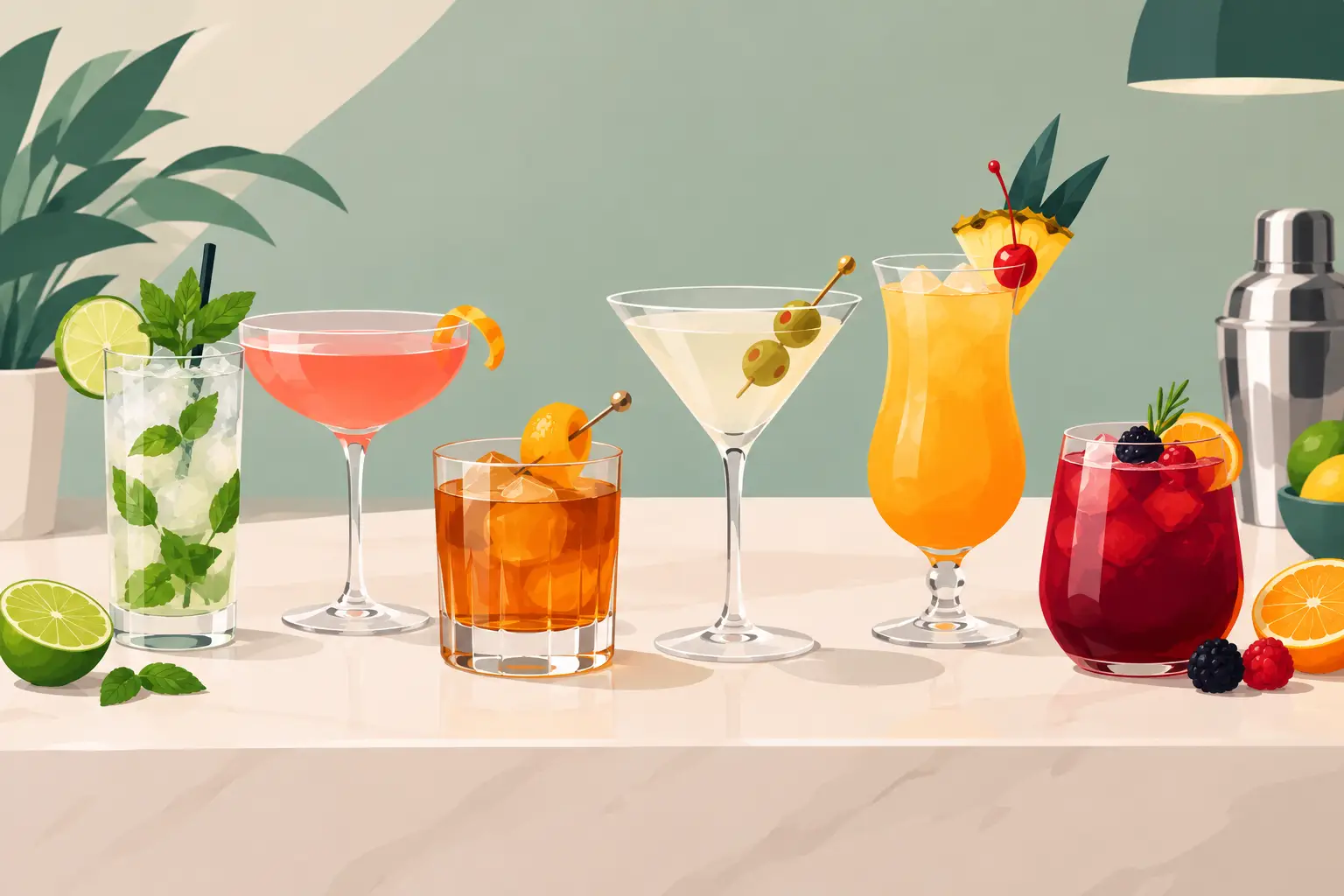
A good home cocktail does not begin with a shopping list. It begins with the bottle already open, the citrus in the crisper, and a realistic answer to one question: what can I make well right now? These easy cocktail recipes rely on familiar ingredients, repeatable proportions, and techniques that do not require a bartender’s station.
The fastest route to a better drink is to start from bottles, mixers, and fresh ingredients already in your bar. A spirit, something tart or bitter, and something to lengthen or sweeten it will cover more ground than a cabinet full of rarely used liqueurs. Use fresh citrus when the recipe calls for it, measure rather than free-pour, and taste before making a second round.
What makes a cocktail easy to make?
An easy cocktail is not necessarily a two-ingredient drink. It is a drink with a clear build, accessible ingredients, and little room for technique to go wrong. Highballs are especially forgiving because ice and sparkling mixers naturally balance a spirit. Sours take one more step, but a shaker and a small measure of simple syrup are enough to make them dependable.
The trade-off is that simple drinks leave fewer places for poor ingredients to hide. Flat soda, old citrus juice, or weak ice can make a basic build taste thin. Start with plenty of fresh ice, refrigerate mixers after opening, and buy citrus in quantities you will use within a few days.
12 easy cocktail recipes for the bottles you own
Gin and Tonic
Build 2 ounces of gin over ice in a tall glass, then top with 4 to 6 ounces of chilled tonic water. Give it one gentle stir and add a lime wedge. This is a useful first drink for a new gin because tonic brings bitterness and sweetness while allowing the gin’s botanical profile to stay recognizable.
Vodka Soda with Lime
Add 2 ounces of vodka to an ice-filled highball glass and top with 4 to 6 ounces of club soda. Squeeze in a lime wedge, then drop it into the glass. Choose this when you want a clean, dry drink, but do not confuse it with a flavor-free one: the lime and a well-chilled soda do most of the work.
Rum and Coke
Pour 2 ounces of light or aged rum over ice and add 4 ounces of cola. Finish with a lime wedge if you have one. Light rum keeps the drink crisp; aged rum adds vanilla, caramel, and a fuller finish. Either works, so this is a practical way to use the rum already on hand.
Moscow Mule
Build 2 ounces of vodka and 1/2 ounce of fresh lime juice over ice, then top with 4 ounces of ginger beer. Stir briefly. Ginger beer, not ginger ale, provides the peppery heat that gives the Mule its character. If ginger beer is too intense, use less and add a splash of club soda rather than making the whole drink sweeter.
Dark ’n Stormy-Style Highball
Fill a tall glass with ice, add 2 ounces of dark rum and 1/2 ounce lime juice, then top with ginger beer. The classic Dark ’n Stormy is closely associated with a specific rum brand, so call this a dark rum and ginger beer highball when using another bottle. It is equally satisfying and more transparent about what is in the glass.
Tequila Paloma
Add 2 ounces of blanco tequila and 1/2 ounce of lime juice to an ice-filled glass. Top with grapefruit soda and stir gently. A small pinch of salt can soften grapefruit bitterness and make the tequila taste brighter. If your grapefruit soda is very sweet, increase the lime slightly; if it is dry, leave the balance alone.
Whiskey Ginger
Build 2 ounces of bourbon, rye, or blended whiskey over ice and top with 4 ounces of ginger ale. Add a lemon wedge. Bourbon makes a rounder, sweeter version, while rye adds spice and a drier edge. Ginger ale is right here because the drink is meant to be easygoing, not as fiery as a Mule.
Whiskey Sour
Shake 2 ounces of bourbon, 3/4 ounce fresh lemon juice, and 3/4 ounce simple syrup with ice. Strain over fresh ice in a rocks glass. This three-part structure is worth remembering: spirit, citrus, sweetener. If your lemons are particularly sharp, add another 1/4 ounce of syrup. If your bourbon is sweet and soft, hold the standard ratio first.
Tom Collins
Shake 2 ounces of gin, 1 ounce lemon juice, and 1/2 ounce simple syrup with ice. Strain into an ice-filled tall glass and top with club soda. The Collins is a useful bridge between a sour and a highball: it has the brightness of a shaken drink but the relaxed pace of a long one. Add soda last to preserve its lift.
Daiquiri
Shake 2 ounces of white rum, 1 ounce fresh lime juice, and 3/4 ounce simple syrup with ice. Fine-strain into a chilled coupe, or strain over fresh ice if that is more practical. A classic Daiquiri is not a frozen blender drink. Its appeal is precision: rum richness, lime acidity, and measured sweetness in a short, cold serve.
Margarita
Shake 2 ounces of blanco tequila, 1 ounce orange liqueur, and 1 ounce fresh lime juice with ice. Strain over fresh ice in a salt-rimmed rocks glass, if you like. The salt is optional, but it sharpens the citrus and tempers bitterness. No orange liqueur? You can make a tequila sour with tequila, lime, and simple syrup, but it will not taste like a standard Margarita.
Negroni
Stir 1 ounce gin, 1 ounce sweet vermouth, and 1 ounce Campari with ice until very cold, then strain over a large ice cube. Express an orange peel over the glass if available. This is easy to build but not universally easy to enjoy: Campari’s bitterness is assertive. If you are new to bitter cocktails, begin with 3/4 ounce Campari and 1 1/4 ounces gin.
Build a small bar that creates more options
Buying another spirit does not always create more useful drinks. Often, one flexible mixer or modifier opens a larger part of your existing bar. Fresh lemons and limes support sours, Collins drinks, and highballs. Simple syrup turns strong spirits and citrus into balanced drinks. Club soda, tonic, ginger beer, cola, and grapefruit soda each create a different long-drink path.
Vermouth and orange liqueur are higher-impact additions once you already have basic spirits. They introduce classic stirred drinks and richer sours, but they need storage attention. Refrigerate opened vermouth and use it while its flavor remains fresh. A bottle that tastes dull or oxidized can make an otherwise correct recipe seem wrong.
This is where ingredient-first discovery is more useful than browsing random drink names. Kokto’s reviewed recipe library helps show what is ready to make, what is missing one meaningful ingredient, and what a single purchase would add to your options. The difference matters when you are choosing between another novelty bottle and a versatile item you will actually finish.
A few rules that prevent wasted drinks
Use a jigger or measuring spoon. A tablespoon equals 1/2 ounce, which is enough to make a noticeable difference in a sour or stirred drink. For simple syrup, use equal parts sugar and hot water, stirring until clear, then refrigerate it in a clean container.
Do not use the same ice for shaking and serving. Shaking ice has already diluted the drink; fresh serving ice keeps the final pour colder for longer. For sparkling drinks, build directly in the glass and stir only once or twice. Too much stirring drives off carbonation.
Finally, substitute by function rather than by color or shelf position. Lemon and lime are related but not interchangeable in every recipe. Club soda can replace sparkling water, but not tonic, which adds quinine bitterness and sweetness. A whiskey sour can tolerate a different whiskey style; a Negroni cannot lose its bitter component and remain a Negroni.
Make one recipe exactly as written before adjusting it. Once you know its intended balance, you can confidently use the bottles and ingredients in front of you to make the next glass your own. Enjoy responsibly, and plan a nonalcoholic option when you are serving a group.