
Coupe Versus Martini Glass: Which Fits Your Drink?
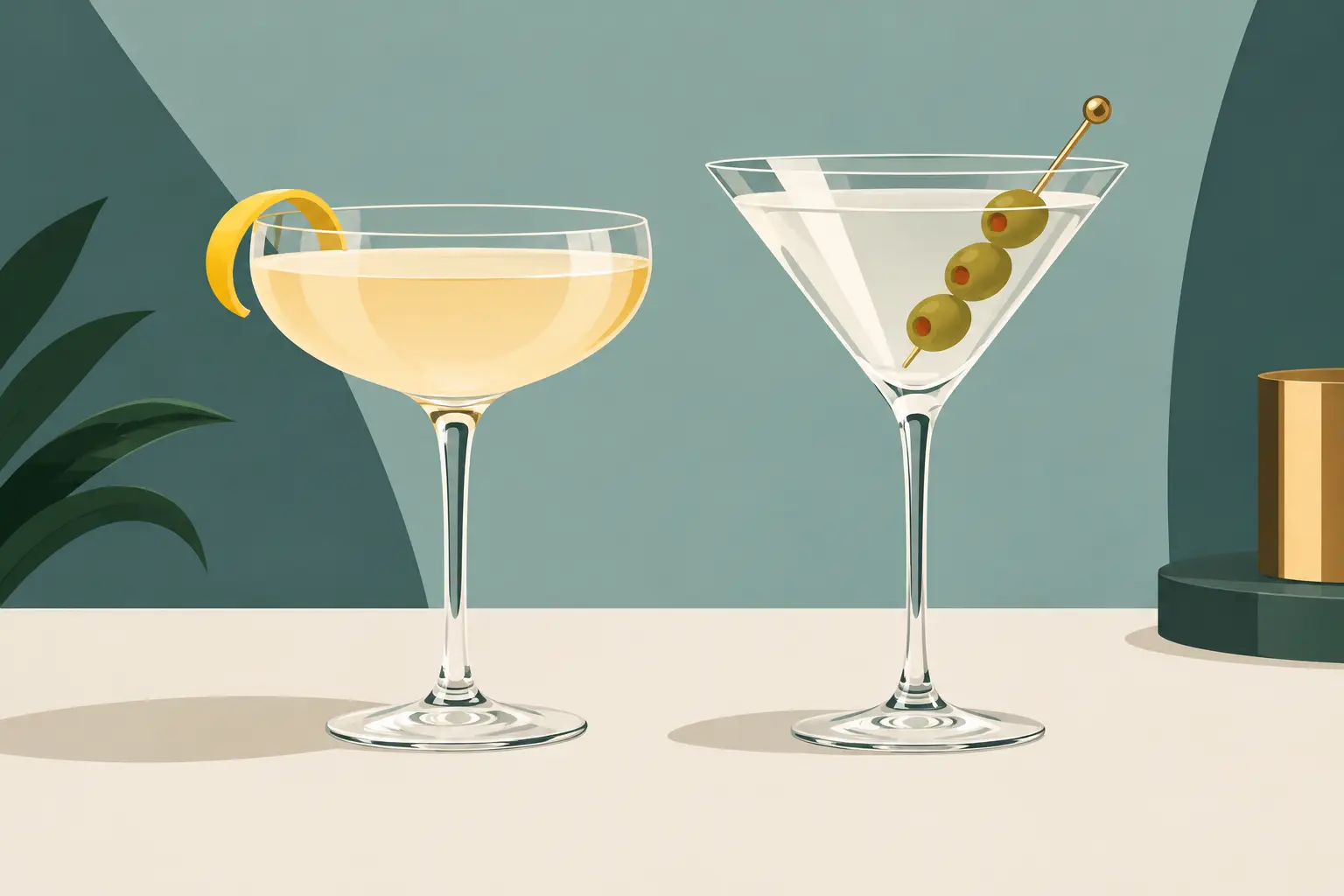
A coupe versus martini glass decision can change more than the look of a finished drink. The bowl shape affects how easily a cocktail spills, how quickly it warms, how much aroma reaches the drinker, and whether a garnish sits where it should. If you are setting up a practical home bar, the right choice comes down to the recipes you make most often and the way you like to serve them.
Both glasses are designed for cocktails served up: chilled, strained, and poured without ice. Neither is universally better. A coupe is usually more forgiving and versatile, while a V-shaped martini glass offers a more dramatic presentation for the right drink.
Coupe Versus Martini Glass: The Basic Difference
A coupe has a broad, shallow bowl with a rounded curve, a stem, and a flat foot. Modern versions vary considerably, but many hold roughly 5 to 7 ounces. The bowl is wide enough to show off a drink’s surface and garnish, yet the curved sides give the liquid a little more security than a sharply angled glass.
A martini glass, often called a cocktail glass, has a conical bowl with straight sides that form a V. It is also stemmed, which keeps the drinker’s hand away from the chilled liquid. Traditional sizes can be modest, but many home-bar versions hold 8 ounces or more - a capacity that can make a standard 3- to 4-ounce cocktail look underfilled.
The most visible difference is the rim. A coupe creates a horizontal, rounded opening. A martini glass creates a pointed, angular silhouette. That distinction has practical consequences once the drink leaves the bar spoon and reaches the couch, dining table, or crowded party.
Why the Glass Shape Matters
Stemmed glasses exist for a simple reason: stirred and shaken cocktails are usually best very cold and free of ice. Hold the bowl and you transfer heat directly into the drink. Hold the stem and the temperature holds longer.
The bowl determines what happens next. A wide coupe exposes a larger surface area, which lets aroma rise readily but also allows the cocktail to warm sooner. That is rarely a problem for a well-sized Daiquiri or Sidecar, which should be enjoyed promptly. It can matter for a leisurely, spirit-forward drink such as a Martini.
A martini glass is not necessarily colder by design, but its deeper shape can keep a smaller pour gathered in the center. Its sharp sides also make the glass less stable in motion. Fill one close to the rim and the first turn away from the counter can become a cleanup job.
This is why capacity matters more than the label on the box. For most classic up cocktails, a 5- to 6-ounce coupe provides a useful margin between the drink and the rim. If you prefer martini glasses, look for smaller bowls rather than oversized restaurant-style glasses. A 4-ounce cocktail should look intentional, not lonely.
Cocktails That Work Best in a Coupe
The coupe is a strong default for home cocktail making because it suits a wide range of shaken and stirred recipes. Its rounded bowl looks at home with citrus-forward classics and supports delicate foam without making the drink difficult to carry.
Use a coupe for a Daiquiri, Bee’s Knees, Sidecar, Aviation, Corpse Reviver No. 2, Last Word, or French 75. It is also a smart choice for a shaken sour served without ice, especially when egg white or aquafaba creates a foam cap. The broad surface gives that texture room to show, while the curved bowl helps contain it.
A coupe can also serve a Martini, Manhattan, or Negroni variation when you prefer its feel or only want to stock one kind of stemmed cocktail glass. That is not a compromise in flavor. Glassware traditions provide useful guidance, but a properly chilled glass and a correctly balanced recipe matter more than forcing every drink into a narrowly defined shape.
One limitation: very large or elaborate garnishes can feel awkward in a shallow coupe. A long citrus twist works well when draped across the rim, but a tall herb sprig, cocktail pick, or multiple skewered olives may be easier to manage in another glass.
When a Martini Glass Makes More Sense
Choose a martini glass when the presentation is part of the point. Its clean lines emphasize the clarity of a well-stirred drink, particularly a Dry Martini, Gibson, Vesper, or vodka Martini. A single olive, lemon twist, or cocktail onion reads clearly against the open bowl.
The V shape also works well for drinks with a salt or sugar rim. A Cosmopolitan, Lemon Drop, or Chocolate Martini can look especially sharp in this format. Just keep the pour measured. A heavily filled martini glass can turn an otherwise polished drink into an impractical one.
For a Martini with olives or onions, the deeper bowl offers another small advantage: the garnish has more room to settle below the rim. That can reduce splashing compared with a very shallow coupe. If you serve stirred, spirit-forward cocktails slowly, chilling the glass thoroughly before pouring becomes especially valuable.
There is a social consideration, too. Martini glasses are more formal and more theatrical. That may be exactly right for a small dinner, an at-home date night, or a menu built around classic aperitifs. For a standing gathering or a group moving between rooms, coupes tend to be easier for guests to carry.
The Myth and the Useful History
You may hear that the coupe was modeled on a famous woman’s breast. It is a durable bar-story myth, not a reliable explanation for the glass’s design. The coupe developed from earlier stemmed drinking vessels and became associated with Champagne long before the modern cocktail revival gave it a new role.
Its Champagne history explains one thing clearly: a wide bowl releases carbonation quickly. That makes a coupe less practical than a flute or tulip-shaped sparkling wine glass when preserving bubbles is the priority. For a French 75, however, the drink is built to be served and enjoyed fresh, so the visual appeal and cocktail tradition can outweigh the shorter-lived fizz.
The martini glass became a defining symbol of the twentieth-century cocktail, though classic Martinis have appeared in several glass styles over time. Neither vessel owns a recipe completely. Their value lies in helping the drink look, feel, and perform as intended.
Build a More Useful Home-Bar Glass Collection
If storage is limited, start with four to six matching coupes around 5 or 6 ounces. They cover an impressive share of classic cocktails and make party service look coordinated without demanding a cabinet full of specialty stems. Their versatility is especially helpful when you are making drinks from the bottles, mixers, and fresh ingredients already in your bar.
Add martini glasses if Martinis, Gibsons, Cosmopolitans, and rimmed cocktails are regular choices in your rotation. Select durable glasses with a stable foot and avoid excessively large bowls unless you routinely make larger-format serves. A standard recipe should fill the glass attractively with enough room to carry it.
Whichever style you choose, chill it before mixing. Place clean glasses in the freezer for a short time, or fill them with ice and cold water while you prepare the cocktail, then empty and dry them before straining. That simple step improves both styles more than buying a more expensive design.
If you want one additional option beyond these two, consider a Nick and Nora glass. Its smaller, tulip-like bowl is excellent for spirit-forward up drinks and can be less spill-prone than a broad coupe or V-shaped martini glass. It is not essential, but it solves a real serving problem for people who like a compact, precise pour.
The best glass is the one that supports the drink you are actually making tonight. Start with the recipe’s volume, garnish, and serving setting, then choose the vessel that keeps it cold, manageable, and inviting. A chilled coupe makes many cocktails feel immediately ready to serve; a martini glass gives the right classics their deserved sense of occasion.