
How to Scale Cocktails for Parties Without Guesswork
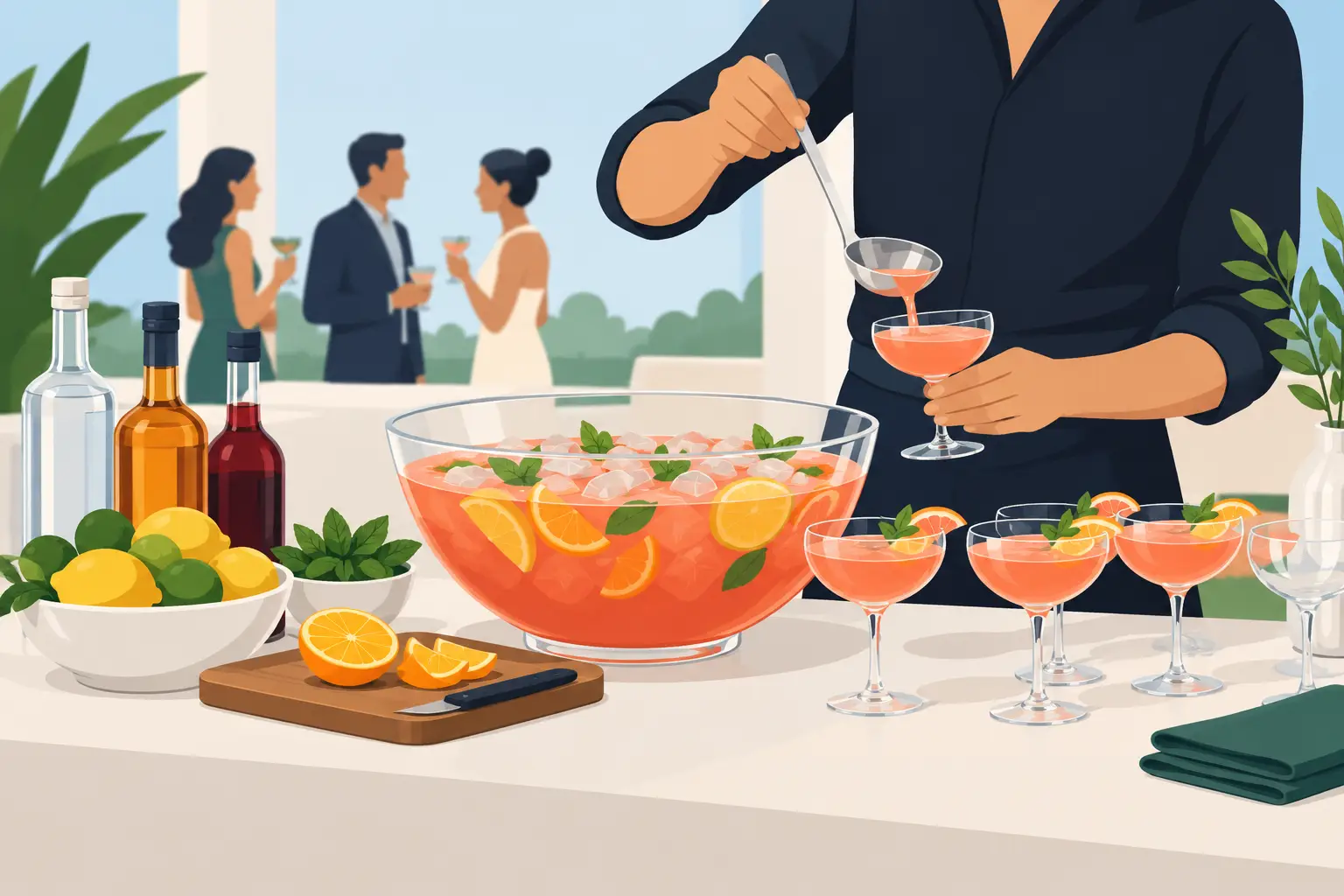
The first round is easy. The fifth is where a casual cocktail plan turns into sticky counters, vague pours, and a host who misses their own party. To scale cocktails for parties, start with drinks that remain balanced in a pitcher or bottle, then separate the ingredients that need to stay fresh, fizzy, or frozen until serving.
A good party batch is not simply a single recipe multiplied by eight. Shaken drinks pick up water from ice. Citrus loses its brightness over time. Carbonated mixers go flat if added too early. Once you account for those changes, serving a reliable round of cocktails becomes a straightforward piece of prep rather than a live bartending test.
Choose cocktails that scale well for parties
The best large-format cocktails are built around stable ingredients: spirits, liqueurs, fortified wines, syrups, bitters, and shelf-stable juices. Think Old Fashioned-style drinks, Manhattans, Negronis, Boulevardiers, spirit-forward sours with fresh citrus added near service, and simple highballs assembled from a prepared base.
A stirred, all-spirit drink is the simplest place to begin. Its flavor changes very little in a sealed bottle held cold, and you can add measured water in advance to replace the dilution normally created by stirring with ice. A Negroni, for example, is naturally equal parts gin, Campari, and sweet vermouth. If you want eight 3-ounce servings, multiply each component by eight: 8 ounces gin, 8 ounces Campari, and 8 ounces sweet vermouth. Add dilution, chill, and pour over fresh ice.
Drinks with citrus can work just as well, but they need a shorter timeline. Lemon and lime juice are brightest when squeezed on the day of the party. For a Daiquiri or Margarita-style batch, combine the spirits, liqueurs, syrup or agave, and citrus a few hours ahead. Keep the batch cold, then taste it before guests arrive. Citrus varies in acidity, so the original ratio is a starting point, not a guarantee.
Carbonated drinks need a different approach. Batch the alcoholic and sweet components, then add soda, tonic, sparkling wine, ginger beer, or other fizzy ingredients directly in each glass. This preserves carbonation and lets guests choose a lighter or stronger pour. Frozen drinks are usually better made in smaller blender rounds unless you have equipment designed to hold them at the right texture.
Start with a tested single-serve recipe
Scaling only works when the original drink is clear. Use a complete recipe with specific measurements, not a loose memory of a drink you liked at a bar. Identify every ingredient, the intended serving size, and whether the drink is shaken, stirred, built over ice, or topped with something bubbly.
Then decide how many servings you actually need. For a two- to three-hour gathering where cocktails are one option among beer, wine, and nonalcoholic drinks, planning for one to two cocktails per guest is often reasonable. For a cocktail-focused dinner or a smaller group that knows the menu, two drinks per guest may be more realistic. It depends on the occasion, the length of the event, food, and the number of alternatives available.
Do not make three full cocktails per person just because the math is easy. A smaller menu with a sensible batch size reduces waste, protects your budget, and makes it easier to offer water and nonalcoholic choices alongside the bar.
Use a simple batch formula
For each ingredient, multiply the single-serving amount by the number of planned servings. Keep all measurements in the same unit, preferably ounces for home batching.
If one cocktail calls for 2 ounces bourbon, 3/4 ounce lemon juice, 1/2 ounce simple syrup, and 2 dashes bitters, an eight-serving batch needs 16 ounces bourbon, 6 ounces lemon juice, 4 ounces simple syrup, and 16 dashes bitters. That produces 26 ounces before dilution, or just over 3 ounces per drink.
For ingredients measured in dashes, it is worth testing a small conversion before committing to a full batch. Dash sizes differ by bottle and by how firmly you shake. Count 16 dashes into a measuring spoon once, write down the result, and use that measurement for the larger batch. The same principle applies to thick syrups, honey mixtures, and strongly flavored ingredients such as absinthe or saline solution.
Account for dilution before guests arrive
Dilution is the part most often missed when people scale cocktails for parties. A single shaken or stirred drink is chilled and softened by melting ice. If you batch only the liquid ingredients and pour them over ice, the drink may taste hotter and more concentrated than the original recipe, especially during the first few sips.
For stirred cocktails, add about 20 to 25 percent water to the total pre-dilution batch, then chill it thoroughly. A 24-ounce batch of spirit-forward ingredients would receive roughly 5 to 6 ounces of cold water. This is a useful baseline, but test one serving first. A very boozy recipe may benefit from the higher end; a batch served over plenty of ice may need less.
Shaken citrus drinks are less predictable because shaking creates aeration as well as dilution. Instead of adding all the water in advance, begin with 10 to 15 percent water, chill the batch, and shake or vigorously stir one test serving with ice. If it tastes sharp or overly strong, add a little more water to the main batch in 1-ounce increments. This small test is faster than correcting a whole pitcher after people have arrived.
Cold temperature matters as much as added water. Refrigerate the batch for several hours, or place it in the freezer if its alcohol content is high enough to prevent freezing solid. A cold batch melts less ice in the glass, so the flavor stays closer to the version you tested.
Build a menu around shared ingredients
A party menu does not need six cocktails to feel thoughtful. Two drinks, plus a nonalcoholic option, is often the better host decision. Choose recipes that share a base spirit, citrus, syrup, garnish, or glassware. You will buy fewer one-purpose ingredients and spend less time explaining choices.
For example, a bourbon menu might pair an Old Fashioned-style batch with a whiskey sour base. The first uses bourbon, sugar, bitters, and orange; the second uses bourbon, lemon, and simple syrup. The bottles overlap, while the experiences stay distinct. A gin menu could pair a pre-batched gin and vermouth cocktail with a gin highball base finished individually with tonic or soda.
Start from bottles, mixers, and fresh ingredients already in your bar. If you have gin, sweet vermouth, Campari, lemons, and soda, the real gap may be nothing more than enough ice and oranges for garnish. If a single purchase opens several drinks you would genuinely serve, it earns a place on the list. If it supports only one complicated recipe, consider whether the menu needs it.
Kokto’s recipe library can help organize this decision by showing cocktails you can make now, recipes missing one meaningful ingredient, and the options a specific purchase adds to your bar.
Prep the parts that should not go into the batch
Treat ice, garnish, and carbonation as service components, not afterthoughts. Buy more ice than seems necessary. Ice chills the batch, fills glasses, and protects the intended dilution. Small, cloudy freezer ice melts quickly, so it is useful for shaking but less reliable for drinks that will sit while guests talk.
Cut citrus wheels, twists, and wedges shortly before the party and store them covered in the refrigerator. If you are using mint, basil, cucumber, or berries, prep a modest amount first and replenish only if needed. Delicate garnishes can look tired long before the batch runs out.
Set out a jigger or marked measuring cup for consistent pours, even if you are using a pitcher. A 3-ounce pour is easier to repeat than an unmarked splash. Label each batch with the drink name, serving size, and any final instruction such as add 2 ounces tonic or shake with ice. That lets a friend help serve without having to memorize your recipe.
Taste, adjust, and make the first pour easy
Make the batch early enough to test it in the exact way guests will receive it. Pour it over the same ice, use the same glass, add the same topping, and include the garnish if it affects aroma. Taste for sweetness, acidity, proof, temperature, and finish.
Adjust carefully. If a batch is too sweet, a small amount of citrus or additional base spirit may help, depending on the drink. If it is too tart, add syrup in small measured amounts. If it tastes too strong, first confirm that it is cold enough, then add water gradually. Avoid trying to fix every issue at once. One change, one test, and a written note keeps the process clear.
Finally, make the opening round almost automatic. Keep the chilled batch within reach, glasses ready, ice nearby, and nonalcoholic drinks visible from the start. A well-scaled cocktail is not about turning your kitchen into a bar program. It is about giving people a good drink while leaving yourself free to enjoy the party.