
Rum Types for Cocktails and How to Use Them
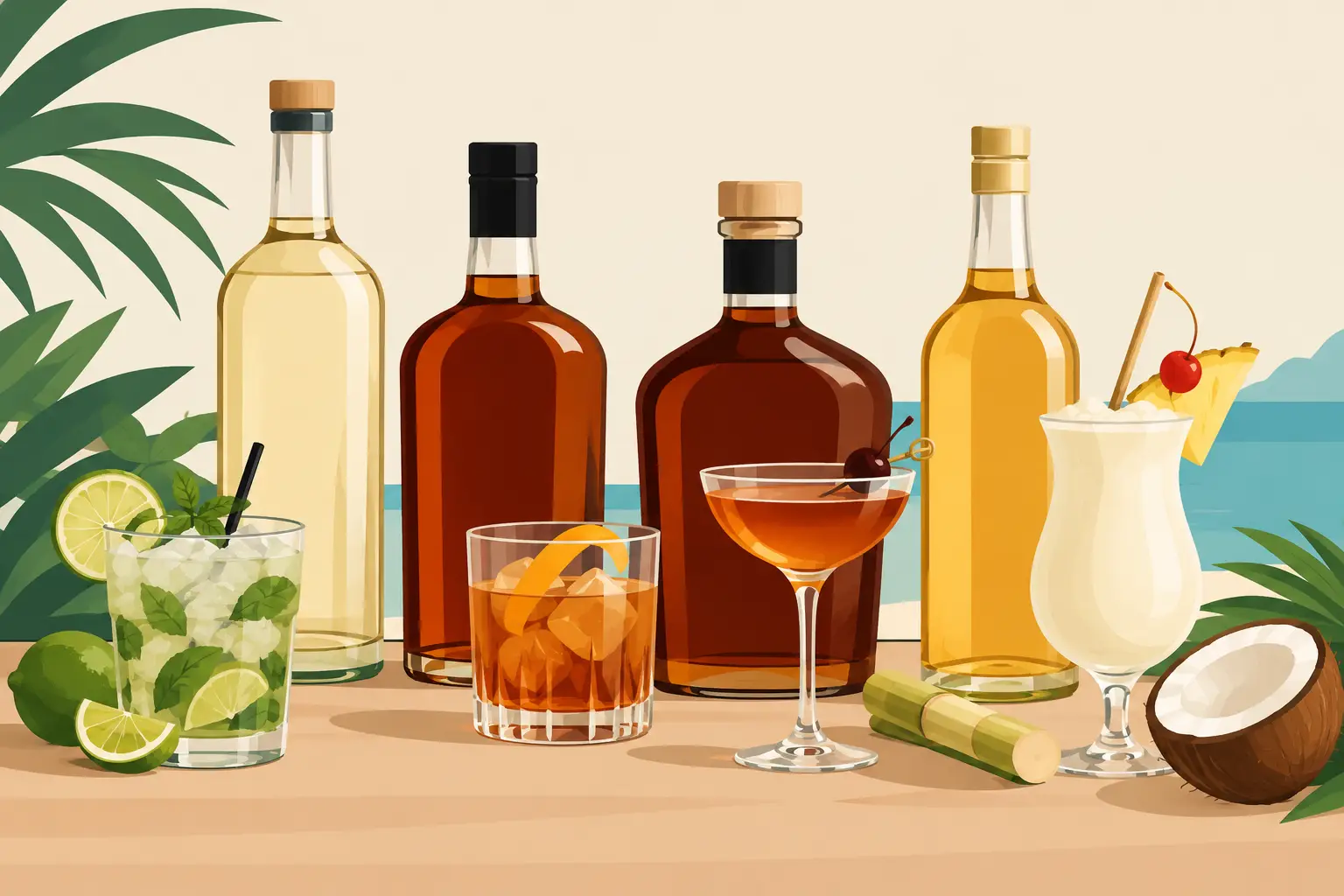
A Daiquiri made with a light, dry rum and one made with a rich aged rum are both recognizable, but they are not the same drink. That is why choosing rum types for cocktails is less about finding the “best” bottle and more about matching a rum’s flavor, strength, and character to the recipe in front of you.
Rum labels can make this harder than it needs to be. Terms such as white, gold, dark, and black describe appearance and common style expectations, but they are not always strict production categories. Age statements, added color, barrel treatment, and regional traditions can all change what is inside the bottle. Start with the cocktail’s role for rum, then choose a style that supports it.
The main rum types for cocktails
White rum
White rum, also called light or silver rum, is the practical starting point for most home bars. It is usually clear because it is unaged or aged briefly and filtered after aging. The flavor can range from very clean and subtle to grassy, fruity, or lightly funky depending on where and how it was made.
Use white rum when a recipe needs crispness and the supporting ingredients should stay visible. It is the standard choice for a Classic Daiquiri, Mojito, Cuba Libre, Piña Colada, and many shaken tropical drinks. In a Daiquiri, its clean profile lets fresh lime and sugar do the work. In a Mojito, it keeps mint bright rather than turning the drink into a heavier, caramel-forward serve.
If your bottle tastes notably rich, sweet, or heavily vanilla-toned, it may still work, but expect a rounder result. A dry white rum is the most flexible choice when you are building from scratch.
Gold and lightly aged rum
Gold rum, often called amber rum, generally sits between white and dark styles. It may spend time in oak barrels, gain color from barrel contact or approved coloring, and bring notes such as vanilla, baking spice, toasted sugar, or light caramel. The category is broad, so two gold rums can behave very differently.
This is a useful style for cocktails that need more body without becoming fully spirit-forward. Try it in a Rum Old Fashioned, a Dark ’n’ Stormy-style highball, a Jungle Bird, or a rum punch where citrus and fruit can handle some barrel character. It also makes a good bridge bottle for people who find white rum too neutral but do not want the full weight of a dark rum.
When a recipe simply says “rum,” a light gold or moderately aged rum is often a sensible interpretation. Check the other ingredients first. If the drink contains delicate mint, coconut water, or sparkling wine, white rum may still be the better call. If it includes pineapple, coffee, ginger, allspice, or bitter aperitifs, a gold rum can add useful structure.
Aged rum
Aged rum is the right choice when rum is meant to be noticed. Time in wood can contribute dried fruit, oak, toffee, spice, roasted nuts, and a fuller texture. Some bottles are dry and elegant; others are rounder and sweeter. Age alone does not tell you which one you have, so tasting a small pour before mixing is worthwhile.
Use aged rum in drinks with fewer competing flavors: a Rum Old Fashioned, El Presidente, Corn ’n’ Oil, or a stirred split-base drink with whiskey or brandy. It can also improve a simple rum and cola when you want the rum itself to matter.
The trade-off is that aged rum can overwhelm recipes designed around bright, clean white rum. An aged-rum Daiquiri can be excellent, but it becomes a different expression. Consider reducing the sweetener slightly if your rum has pronounced vanilla or caramel notes, then adjust to taste.
Dark and black rum
Dark rum is a visual description, not a guarantee of a specific flavor profile or age. It may be aged longer, blended for a deeper profile, or colored to achieve a darker appearance. Black rum is often fuller, more molasses-forward, and more intense, though bottle styles vary widely.
These rums work well where a drink needs bass notes: rich sweetness, baking spice, molasses, coffee, or smoke-like depth. Think Dark ’n’ Stormy-style drinks, Rum Swizzles, rich punches, and some tiki recipes. They can also bring welcome contrast to pineapple, passion fruit, ginger beer, and lime.
Do not automatically replace white rum with dark rum in a recipe. A Mojito made with black rum can lose its fresh, lifted quality. Conversely, using a mild white rum in a drink built for dark rum may leave it thin. If a recipe calls for dark rum but you only own aged rum, use it as a close substitute and expect a cleaner, less molasses-driven result.
Blackstrap rum
Blackstrap rum deserves its own note because the name causes frequent confusion. It is not simply very dark rum, and it is not necessarily made from blackstrap molasses. In cocktails, blackstrap rum usually means a highly dark, assertive style with deep molasses, licorice, burnt sugar, and spice notes.
Use it sparingly when a recipe specifies it, especially in tiki drinks. It is often paired with lighter rums rather than used as the only base. That split keeps the drink energetic while adding the dark, earthy note the recipe expects. If you substitute ordinary dark rum, the cocktail may still be good, but it will likely be less dramatic.
Jamaican rum
Jamaican rum is a regional style with a distinctive range, from easygoing and lightly fruity to intensely aromatic. Many examples feature “funk,” a casual term for ripe tropical fruit, fermented banana, pineapple, olive-like, or savory notes created through traditional fermentation and distillation choices.
Jamaican rum is valuable in Mai Tais, Kingston Negronis, Planter’s Punches, and tiki recipes that need personality. A little can go a long way. If you are new to the style, use it in a split base with a clean white rum. You will retain its fruit-forward character without making the cocktail feel too wild or heavy.
Rhum agricole and cane juice rum
Most rum is made from molasses. Rhum agricole and other cane juice rums are made from fresh sugarcane juice, which gives them a noticeably different profile: grassy, earthy, peppery, vegetal, and often dry. They are not interchangeable with every molasses-based rum, but they are essential when a recipe calls for them.
A Ti’ Punch is the clearest example. Its short ingredient list leaves no place to hide the rum’s cane-driven character. Agricole can also bring a compelling green edge to Daiquiris and tropical drinks, particularly alongside lime, pineapple, or passion fruit. If you replace it with standard white rum, the drink will be more familiar but less distinctive.
Overproof rum
Overproof rum is bottled above the standard 80 proof, often at 100 proof or much higher. It adds intensity, aroma, and heat, not just extra alcohol. It is common in certain punches, tiki drinks, and recipes that need a high-impact float or a small amount of concentrated rum flavor.
Treat it as a specific ingredient, not a casual upgrade. Replacing two ounces of standard rum with two ounces of overproof rum can push a balanced cocktail out of range. When experimenting, start by using a half-ounce as part of the base or follow the recipe exactly. For gatherings, keep pours measured and serve thoughtfully.
Spiced and flavored rum: useful, but specialized
Spiced rum brings vanilla, cinnamon, clove, nutmeg, citrus peel, and other flavorings to the bottle. It is convenient for rum and cola, simple highballs, and recipes written specifically for its profile. It is less flexible than plain rum because those spices can clash with herbal liqueurs, bitters, or delicate citrus builds.
Flavored rums work similarly. Coconut rum can simplify a tropical drink, while pineapple rum can make a quick party highball. But neither is a dependable substitute for unflavored rum plus fresh ingredients. If you want a home bar that creates the most options, buy versatile plain rum first and add a flavored bottle only when you know how you will use it.
A practical rum buying order for a home bar
If you own no rum, begin with one dry white rum. It covers a large share of familiar cocktails and gives you a reliable reference point. Your second bottle should depend on the drinks you actually make: choose an aged or gold rum for richer classics, or a Jamaican rum if Mai Tais, punches, and tiki-style drinks are frequent requests.
A third bottle can fill a more specific gap. Add dark or blackstrap rum for bold tropical recipes, agricole for cane-driven classics, or overproof rum for recipes that explicitly call for it. This approach reduces duplicate bottles that look different on a shelf but perform nearly the same role in a drink.
Start from the bottles, mixers, and fresh ingredients already in your bar. A rum collection becomes more useful when you can see which recipes are ready now, which are one meaningful ingredient away, and whether a new bottle opens a genuinely different set of drinks. Kokto’s recipe library is designed around that practical question rather than a generic list of suggestions.
Read the recipe before choosing a substitute
The best substitution depends on what the original rum is doing. Is it supplying clean alcohol, oak and vanilla, fermented-fruit character, molasses depth, grassy cane flavor, or proof? Once you identify that job, you can make a sensible swap.
For a missing white rum, lightly aged rum is usually the closest household substitute, though the drink will be rounder. For Jamaican rum, use a small portion of an aromatic aged rum alongside white rum. For agricole, use a dry white rum and accept that the grassy edge will be absent. For dark rum, an aged rum is often more dependable than a spiced rum, which can add flavors the recipe never intended.
The right rum does not need to be expensive or obscure. It needs to fit the drink, the ingredients you have, and the kind of cocktails you want to make next. Pour thoughtfully, taste as you go, and let each bottle earn its place in your home bar.