
Nonalcoholic Drink Pairings for Pizza, Spicy Food and Chocolate
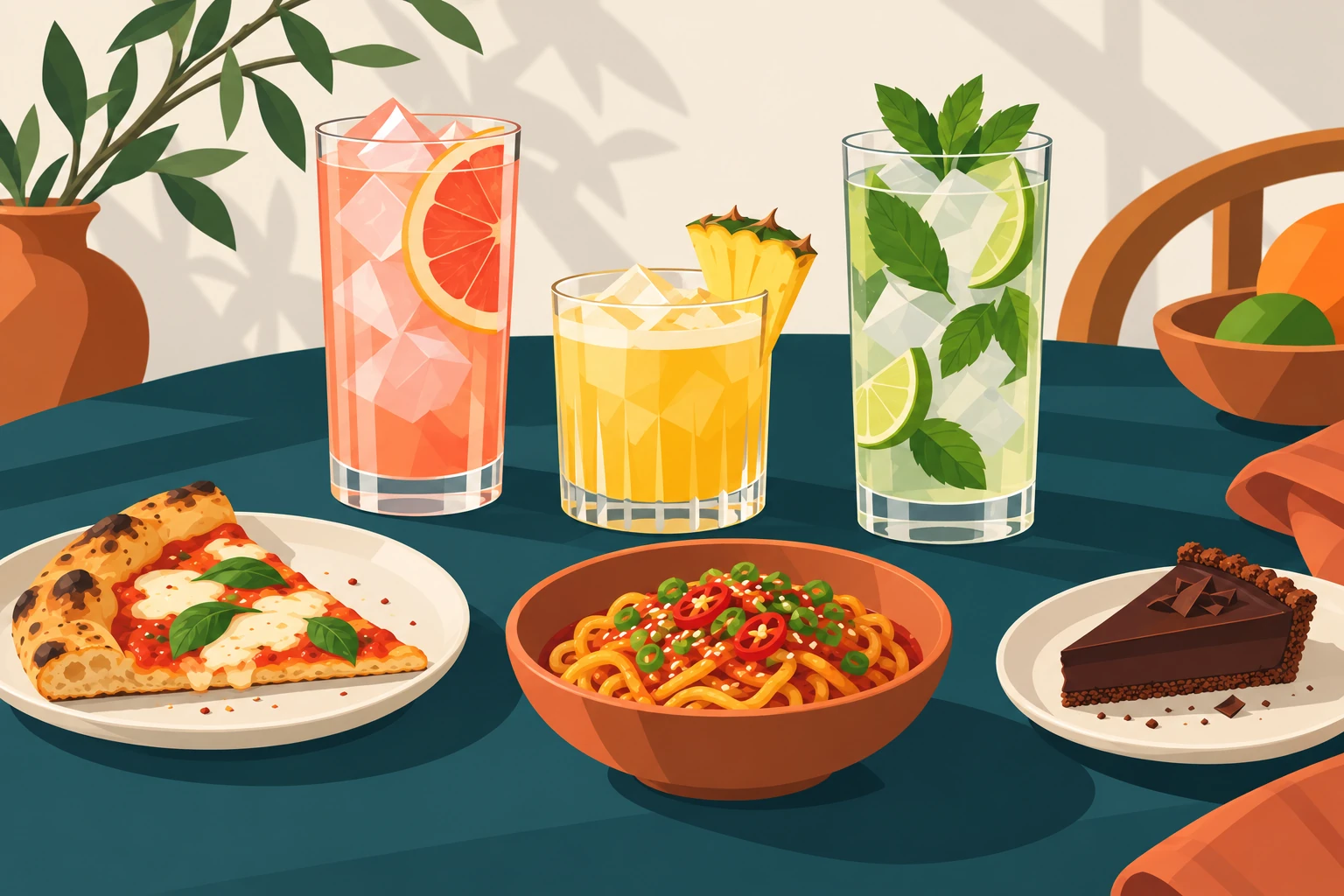
Pizza is on the table, something spicy is coming out of the kitchen, and there is chocolate dessert for later. Choosing a nonalcoholic drink becomes easier when you give it a specific job alongside the food. For a practical starting point, pair tomato-and-cheese pizza with Citrus Tonic, a chili-led dish with Pineapple Coconut Cooler, and a chocolate brownie or tart with Nojito.
These are three flavor-led suggestions for an adult dinner or relaxed gathering. You can choose the one that suits your meal. There is no need to prepare a different drink for every plate, and the best pairing still depends on what your guests enjoy.
Start with the strongest flavor on the plate
A useful pairing begins with what you can actually taste. Tomato sauce, melted cheese and herbs suggest a different direction from hot chili, while a chocolate dessert can range from a relatively bitter cocoa tart to a very sweet frosted cake.
Decide whether you want the drink to echo a flavor or offer a contrast. Pineapple and coconut can sit alongside the ingredients in a tropical or coconut-based dish. A mint-and-lime drink gives a dense chocolate dessert a distinctly different companion. Neither approach requires a specialist bottle or a long list of ingredients.
Taste a sip with a bite before serving the whole table. Toppings, sauces, packaged juices and personal preferences can change the result. The suggestions below are based on the ingredients in Kokto's published recipes, rather than a claim that one pairing will suit every version of a dish.
Pair pizza with Citrus Tonic
For a tomato-and-cheese pizza, start with Citrus Tonic. Kokto's recipe combines grapefruit juice, lime juice and tonic water, with rosemary as an optional finishing ingredient. It is built over ice in the serving glass, which is useful when you would rather bring the pizza to the table than spend the evening with a shaker.
The pairing is about contrast. Grapefruit and tonic give the drink a bitter edge alongside salty cheese, while citrus keeps it from becoming another sweet element in the meal. If you use the optional rosemary, its aroma can also echo an herby topping. This is a sensible place to start with a Margherita-style pizza or one topped with mushrooms and herbs.
Follow the recipe's measures and add the tonic last. Tonic brands differ in sweetness, so choose one you already enjoy. For a guest who dislikes grapefruit or tonic bitterness, this particular pairing may simply be the wrong direction. A useful menu leaves room for that preference.
Pair spicy food with Pineapple Coconut Cooler
For a chili-led curry, spicy noodles or a dish with a sweet-hot glaze, consider Pineapple Coconut Cooler. Its core ingredients are pineapple juice, coconut water and lime juice. The recipe lists simple syrup as optional, so the sweetness of the pineapple juice can guide whether you include it.
Pineapple gives this pairing a fruit-led direction, while coconut can connect with coconut-based sauces or tropical ingredients on the plate. Lime adds a tart note. The appeal is the flavor combination: this is not a claim that the drink neutralizes chili heat, and heat tolerance varies from guest to guest.
Use the coconut water specified in the recipe. Coconut cream would change the texture and balance substantially. Kokto's method shakes the juices and optional syrup with ice, then adds coconut water after straining over fresh ice. Reading that sequence before you start is more useful than treating every ingredient as something to put in the shaker together.
Keep the optional syrup optional
Make the first glass without extra syrup if the juice already tastes sweet to you. Taste it with the food, then decide whether the optional amount suits the pairing. Keep water available alongside the meal and let guests choose the level of spice they are comfortable eating.
Pair chocolate dessert with Nojito
For a chocolate brownie, chocolate tart or another cocoa-led dessert, try Nojito. Fresh mint, lime juice, simple syrup and soda water create a sparkling drink with a clear mint aroma. The mint offers a familiar direction alongside chocolate, while the lime gives the pairing a sharper contrast.
This suggestion is especially worth trying when you want a bright drink beside a dense dessert. Taste it with the actual dish: a very sweet frosting can make the same drink seem more tart than it does alongside a less-sweet chocolate tart. Adjust your expectations before changing the recipe.
Gently press the mint as the method directs, then add crushed ice and soda. There is no need to grind the leaves into a paste. Finish the drink close to serving time so guests receive the mint aroma and bubbles with their dessert.
Make the menu easy to serve
All three drinks use lime, so there is useful ingredient overlap if you choose more than one. The rest of the shopping list follows your selected pairing: grapefruit and tonic for pizza, pineapple juice and coconut water for spicy food, or mint, syrup and soda for chocolate dessert.
Check the complete recipe before buying anything. Count the serves you intend to make, set out the right glasses and keep the preparation steps close at hand. Adding up ingredients does not, by itself, establish a tested batch recipe or make-ahead storage time.
For guests who need to avoid alcohol completely, check the labels on the exact packaged products you use. Kokto's alcohol-free classification is a starting point for choosing recipes; it does not establish the measured alcohol content of every brand or finished drink. Ask about ingredient restrictions without asking guests to explain why they are choosing a nonalcoholic option.
Start with the food already planned and open the matching recipe. One well-chosen drink, made carefully, is enough to give the nonalcoholic part of the table a clear place in the meal.
Sources and editorial note
Recipe ingredients and preparation details come from the linked Kokto Citrus Tonic, Pineapple Coconut Cooler and Nojito pages, checked on 7 October 2026. The food pairings are editorial suggestions based on those ingredients, not results of a comparative tasting. Kokto's editorial policy explains recipe specifications, taste profiles and alcohol-free labeling.