
How to Muddle Mint Correctly for Better Cocktails
A Mojito can go from cool and refreshing to grassy and bitter before the rum even reaches the glass. The difference is usually the mint. Knowing how to muddle mint correctly means extracting its fragrant oils without shredding the leaves, so the drink tastes bright, clean, and intentional.
Mint is not citrus, ginger, or a sugar cube. It needs a lighter touch. Once you understand what the muddler is meant to do, you can make better Mojitos, Southsides, Mint Juleps, and any other drink where fresh mint carries part of the flavor.
What muddling mint actually does
Muddling is a controlled way to press fresh ingredients and release flavor. With mint, the goal is to express the essential oils held near the surface of the leaves and stems. Those oils provide the cool, herbal aroma people expect when a mint cocktail reaches the table.
The goal is not to pulverize the herb. Mint leaves contain chlorophyll and plant compounds that can become unpleasantly vegetal or bitter when aggressively torn apart. A pile of dark green fragments at the bottom of the glass is usually a sign that the mint was overworked.
This distinction matters because aroma does much of the work in a mint drink. A gently pressed leaf can smell remarkably vivid. You do not need to force more flavor out of it with heavy pressure.
Choose and prepare the mint first
Use fresh mint with firm, unblemished leaves. Spearmint is the most common choice for cocktails, particularly a Mojito or Mint Julep, because it is sweet, cooling, and less sharp than peppermint. If your store simply labels a bunch “mint,” it is often spearmint, though the aroma is the better guide.
Rinse the mint under cool water, then dry it thoroughly. Excess water dilutes a drink before you have accounted for it, and wet leaves can slide around rather than muddle evenly. Pat the sprigs dry with a clean towel or use a salad spinner if you are preparing mint for several drinks.
For most cocktails, pick leaves from the lower part of the sprig and reserve a full, attractive sprig for garnish. The smaller leaves near the top are tender and aromatic, making them useful in the drink as well. Thick lower stems can add a green, woody note, so use them sparingly unless a recipe specifically calls for whole sprigs.
How to muddle mint correctly, step by step
Start with mint leaves in a sturdy mixing glass, shaker tin, or the serving glass if the recipe is built there. Add the sugar, simple syrup, lime juice, or other liquid ingredients called for before muddling. A small amount of liquid gives the leaves something to move against and helps distribute the released oils.
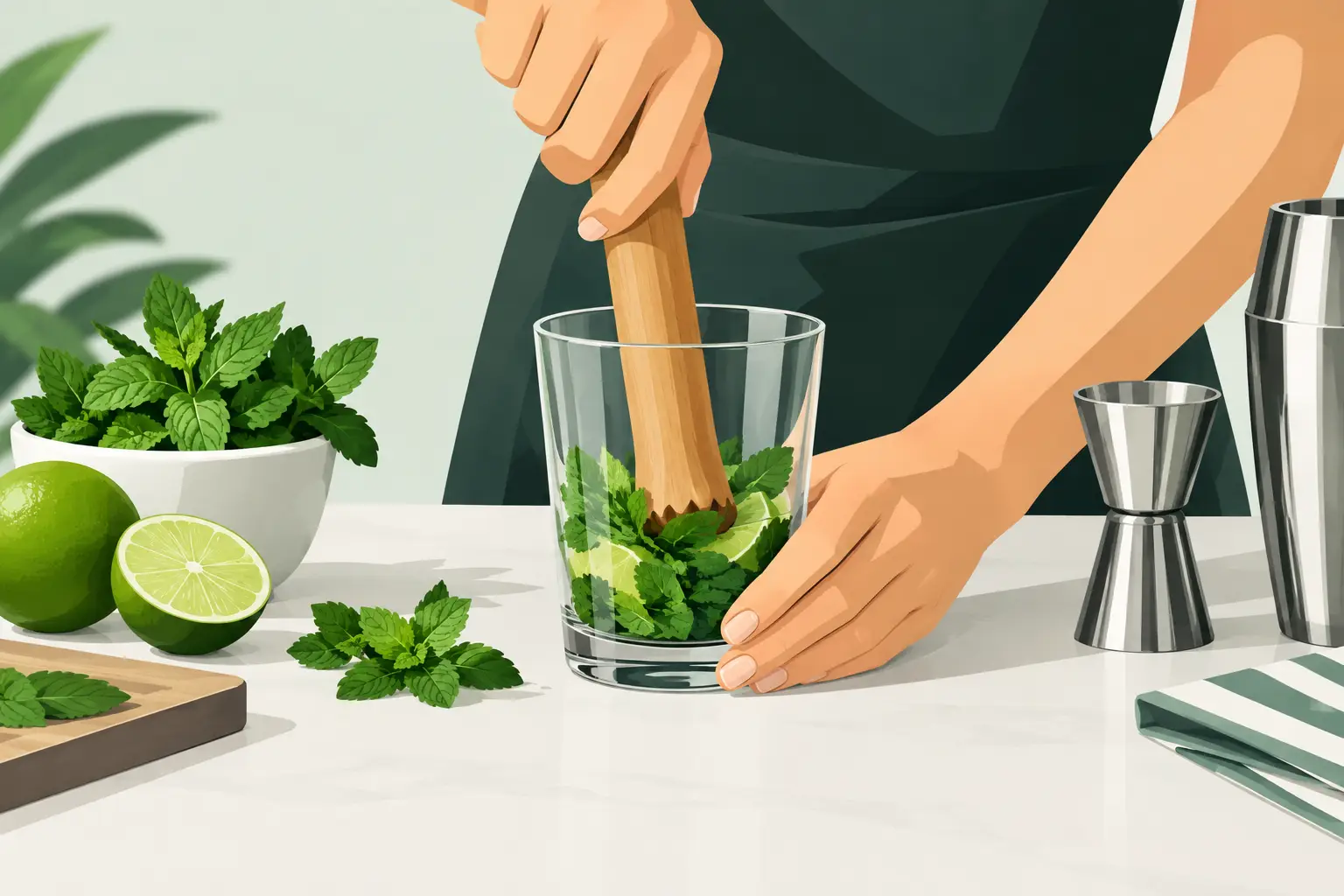
Place the muddler over the leaves and press down gently. Give it two to four short twists, lifting slightly between presses. Think of compressing the leaves against the bottom of the glass, not grinding them as if you were using a mortar and pestle.
Stop when the leaves look lightly bruised and you can clearly smell mint. They may darken a little, but they should still be largely intact. If the leaves are shredded into thin strips, reduce the pressure next time.
A wood, plastic, or stainless-steel muddler all work well. Choose one with a broad, flat or lightly textured base rather than sharp teeth. Deeply ridged muddlers can tear delicate herbs too quickly. If you do not own one, the handle of a wooden spoon is a workable substitute, though it gives you less control.
For a single Mojito, six to 10 average-size leaves are often enough. More mint does not automatically make a drink fresher. It can crowd the glass, clog a straw, and add a vegetal edge. If you want a stronger mint presence, use a fragrant garnish or briefly slap a fresh sprig between your hands before placing it in the drink.
The pressure test
A useful home-bar rule is this: if you can hear loud scraping against the glass, you are probably muddling too hard. Mint should be pressed quietly and briefly. The scent should tell you when to stop.
This light technique can feel almost too simple, especially if you are used to muddling limes or berries. But gentle extraction is the point. A properly muddled mint cocktail gains aroma without tasting like blended salad greens.
Match the method to the drink
The same ingredient can require a slightly different approach depending on the recipe.
In a Mojito, muddle mint with sugar or simple syrup and lime juice, then add rum and ice. Some bartenders prefer to press the lime first and add the mint afterward, which can help protect the leaves from being crushed by lime wedges. Either method works when you keep the mint treatment light. Avoid grinding lime peel and mint together for too long, since lime pith and damaged herbs can both contribute bitterness.
For a Mint Julep, many recipes do not require muddling leaves directly into the drink at all. You can make a mint-infused simple syrup, or lightly press mint with syrup in the serving cup and then remove the leaves before adding bourbon and crushed ice. This produces a cleaner texture and avoids bits of mint collecting around the straw. If you do leave mint in the cup, do not churn it aggressively with the ice.
In a Southside, mint is often shaken with gin, citrus, and sugar. A brief muddle before shaking is enough, but the shaking itself will further agitate the leaves. Use fewer presses than you would for a built drink. Straining the cocktail through a fine strainer is helpful when you want a polished, leaf-free result.
For large-format drinks, such as a pitcher of Mojitos, do not multiply your muddling force along with the recipe. Lightly press the mint in batches, or make mint syrup ahead of time. Preparing syrup takes longer, but it gives you consistent flavor and prevents the last few servings from becoming increasingly bitter as the mint sits.
Common mistakes that make mint cocktails taste off
Over-muddling is the most common issue, but it is not the only one. Dry, tired mint has less aroma and can taste dull no matter how carefully you handle it. Mint that has been sitting in the refrigerator for a week may look acceptable while contributing very little to the drink.
Muddling with no sweetener or liquid can also be awkward. The leaves stick to the glass, and it is easy to apply more force than necessary. A teaspoon of syrup or a little citrus juice creates a better environment for a controlled press.
Another mistake is treating the garnish as an afterthought. A fresh sprig placed close to the drinker’s nose can add more perceived mint flavor than extra muddled leaves ever will. Choose a good-looking top sprig, tap or slap it once to release aroma, and place it upright where it will not fall into the drink.
Finally, account for the fact that mint continues to infuse as a drink sits. A cocktail that is perfect when first served may become more herbal 15 minutes later, especially in a small glass with lots of leaf fragments. When making drinks for guests, strain when the recipe allows and serve promptly over properly chilled ice.
When to skip muddling altogether
Not every mint cocktail benefits from a muddler. If a recipe uses mint syrup, crème de menthe, or another mint-flavored component, fresh leaves may be there mainly for aroma and appearance. In that case, garnish with mint rather than adding more vegetal flavor to the glass.
You can also use a mint syrup when you are hosting, working with a limited supply of herbs, or want less cleanup. Fresh muddled mint has a more immediate, garden-like character, while syrup brings a smoother and more uniform sweetness. Neither is automatically better. Choose based on the drink, your available ingredients, and whether you want a crisp, fresh edge or repeatable batch-friendly results.
Your home bar does not need a complicated technique to produce a convincing mint cocktail. Use fresh leaves, a light press, and your nose as the final check. That small pause before adding the ice is often what turns a good drink into one you will want to make again.